 |
|
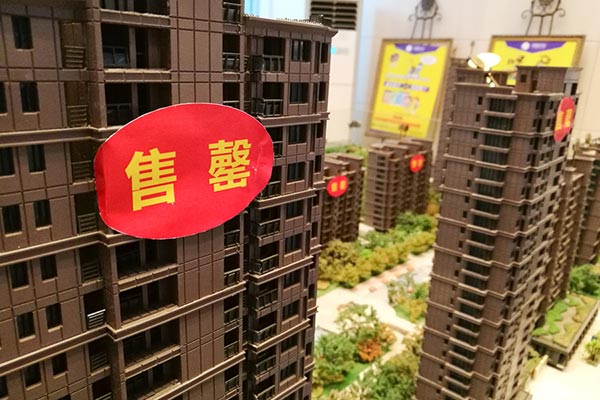
Models of residential buildings are seen at a property showroom in Binjiang district of Hangzhou, Zhejiang province, Sept 14, 2016. The Chinese characters on the boards read "sold out".[Photo/Xinhua] |
In a bid to cool their red-hot property prices, Beijing, Shanghai and Shenzhen, and some major provincial capital cities across China successively introduced measures to limit home buying from the end of September and during the National Day holiday.
Those potential buyers unable to enter the housing market because of soaring prices, hope these regulatory means will reverse the trajectory of home prices to an affordable level. Some of those who have bought homes, however, worry the measures will shrink the value of their property.
Undoubtedly, the adoption of the restrictive home buying measures by 19 cities, most of them first-tier and second-tier cities, is a timely move to curb speculation and reduce rises. But many people are also concerned the "emergency brake" put on these fast-rising housing markets will possibly cause home prices to collapse as happened in Japan in the 1990s. However, such worries are unfounded. China is in a different stage from that of Japan when its property bubble burst. Compared with the interest rate adjustments Japan made to regulate its high realty prices, the restrictive measures formulated by China this time are targeted at restraining speculative demand in the cities where housing prices are believed to be rising as a result of the influx of migrants and speculative demand.
Chinese people are prone to buying real estates, especially when prices climb, and speculative buying prevails when prices are soaring. It is reported that among the couples in Shanghai who divorced during the past months when home prices in the city were rising swiftly, nearly 40 percent got a divorce for the purpose of bypassing the local policy that one family could only buy two homes at most.
By introducing the restrictive measures, the authorities are seeking to cool the overheated property market, not smash the current high home prices. So, most of these measures are mainly to curb speculative demand rather than the demand for a first home. Furthermore, any drastic drop in home prices resulting from these measures will likely cause the authorities to make timely policy adjustments. Thus the restrictive measures are temporary ones only and will not lead to a collapse in the housing market like the one in Japan in the 1990s.
However, many people are drawing comparisons to what Japan did before the collapse of its housing prices in the 1990s, and discussing whether the government will protect property prices or the exchange rate. Around 1990, Japan chose to boost the yen's appreciation through raising its interest rates to attract the flow of foreign funds to Japan. But there is no need to make such a comparison. Aside from its housing market being at a different development stage from that of Japan's at that time, China has also adopted a different monetary policy from its neighbor. China is still in a cycle of interest rate cuts and there is no possibility the government will raise rates. China's central bank has ruled out the possibility of the renminbi's considerable depreciation, although it is expected to continue on a steady downward trajectory to depreciate moderately against the US dollar. A moderate depreciation of the renminbi is conducive to its ongoing economic structural adjustments, given that a weak renminbi will facilitate the country's exports and thus leave more time for it to make the necessary adjustments.
Some foreign media and organizations have raised their forecasts for the growth of China's gross domestic product in 2016. Standard & Poor's for instance has raised its forecast from 6.4 percent to 6.6 percent. That means China's economic growth generally enjoys a relatively optimistic prospect this year, which will undercut the possibility of a drastic decline or collapse of its house prices.
The author is a FXTM analyst on Chinese market.



Copyright 1995 - . All rights reserved. The content (including but not limited to text, photo, multimedia information, etc) published in this site belongs to China Daily Information Co (CDIC). Without written authorization from CDIC, such content shall not be republished or used in any form. Note: Browsers with 1024*768 or higher resolution are suggested for this site.
License for publishing multimedia online 0108263 Registration Number: 130349