 |
|
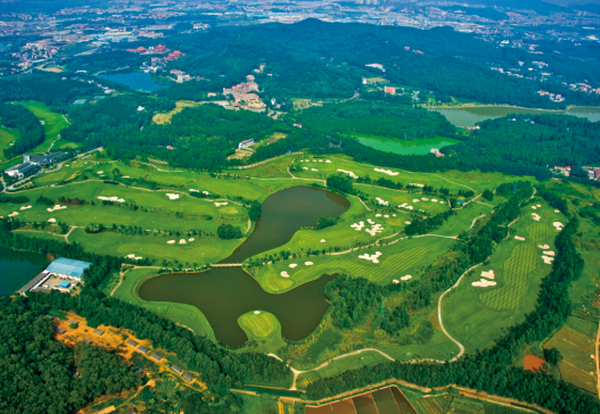
Despite a high urbanization rate, Foshan city conserves a friendly ecosystem in Guangdong province. |
Money has become omnipotent. It is used to measure the value of life and increasingly so to determine the cost of death. Economists have been trying to assign monetary value to every living and non-living objects. Just the other day an American paid $350,000 Namibian authorities to hunt an endangered black rhino saying the amount was enough to compensate for the loss and would help raise awareness about wildlife and boost efforts to save the species from extinction.
Of course, the American national has received scathing criticism and death threats as conservationists and wildlife lovers have reacted to the hunt of one of the most endangered species. But then the power of money has not been lost on anyone.
Before this news saddened and angered people across the world, some researchers assigned monetary values to some of Mother Earth's most important ecosystems. Their contention is that the exercise will help prioritize conservation efforts and funding. They have described the research into the services rendered by our ecosystems as "the benefits people derive from ecosystems - the support of sustainable human well-being that ecosystems provide". Placing financial values on environmental resources, they say, will help raise awareness about the importance of ecosystems and biodiversity.
If their view sounds similar to with that of the American hunter, it is more than coincidental. But more shocking are the absurdly small financial values they have assigned to the nine ecosystems. For instance, the worth of tropical forests is only $2,335 per hectare, prompting the questions: How can the ecosystem that is home to half of the plant and animal species despite covering only 6 percent of the Earth's land surface be worth just more than a couple of thousand dollars. Are the food and pharmaceuticals the tropical forests provide worth only a pittance? How can one place a value on such forests' biodiversity and climate stabilization properties?
Incidentally, open oceans are worth only $135, temperate forests $1,127 and grasslands $2,698 per hectare. All the open oceans, Atlantic, Pacific, Indian and Arctic, and the millions of life forms they are home to are under threat. So are grasslands that give us food, water and other natural resources and help keep climate change in check. Yet they are worth almost nothing.
The monetary value of coastal ecosystems, according to the study, is a pitiable $26,760 per hectare. Coastal and inland wetlands are worth only $12,163 and $16,534 a hectare, and lakes a shocking $3,938 a hectare. According to the UN Environmental Programme, about 40 percent of the people live within 100 kilometers of coastlines, which means they get sustenance from coastal ecosystems and wetlands. Yet the combined worth of the two coastal systems is worth a mere $38,933 a hectare.
Perhaps something went wrong with the study. Else, how could the researchers assign a monetary value of 197,900 per hectare to coral reefs? Still, it does not do any justice to the true worth of coral reefs, which apart from their wide range of biodiversity also provide food for an estimated 1 billion people.
We need money to survive, but money is not the be all and end all of life. Assigning monetary value to every natural resource and system may be a good idea for the market, but it is certainly not conducive to protecting the planet. The nine ecosystems the researchers have studied have sustained life for millions of years. And their worth is beyond the value of all human possessions.
Yet the study has tried to weigh the ecosystems with a few a pieces of paper, which incidentally we get by exploiting the same ecosystems.
Is this a ploy to let market forces run amok with even the most sacrosanct benefits that nature has to offer? The answer is obvious.
The author is a senior editor with China Daily. oprana@hotmail.com
(China Daily 05/23/2015 page5)

I’ve lived in China for quite a considerable time including my graduate school years, travelled and worked in a few cities and still choose my destination taking into consideration the density of smog or PM2.5 particulate matter in the region.

Copyright 1995 - . All rights reserved. The content (including but not limited to text, photo, multimedia information, etc) published in this site belongs to China Daily Information Co (CDIC). Without written authorization from CDIC, such content shall not be republished or used in any form. Note: Browsers with 1024*768 or higher resolution are suggested for this site.
License for publishing multimedia online 0108263 Registration Number: 130349