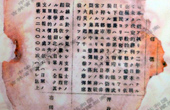
Few wounds take so long to heal. But the defeat in the Sino-Japanese War of 1894-95, which broke out 120 years ago today, remains an open wound in Chinese national psyche.
Not because it hurt us too badly. The subsequent unequal Treaty of Shimonoseki, fittingly portrayed as "humiliating the country and forfeiting its sovereignty", has since been a hallmark of national shame. But the Japanese imposed on us greater shame and sufferings in the decades that followed.
Nor because we are a nation of grudge-holders. We have befriended posterity of Western intruders responsible for our nation's humiliating past, and are forming partnerships with them. Even to Japan, our worst enemy in history, our leaders always reiterate the wish to let friendship "last from generation to generation".
But because the same old ghost of expansionist Japan is lurking next door, causing a contagious sense of insecurity throughout the region.
We cannot afford to not be vigilant, because Shinzo Abe's Japan is strikingly similar to the Japan of 120 years ago. International concerns about the likelihood of history repeating itself in Northeast Asia are not groundless. Because, like in 1894, Japan is again aspiring for "greatness" through expanding its overseas military presence. And its foremost target is, again, China.
It is dangerous to underestimate Japan as a security threat. Which it was, and still is.
The Japanese prime minister's rhetoric about peace may be engaging. But never forget Japan's extreme duality. Its wars of aggression have always been launched in the mode of surprise attacks while waving the banner of peace.
In 1871, Japan signed the Sino-Japanese Friendship and Trade Treaty with rulers of China's Qing Dynasty (1644-1911), which promises mutual respect for and non-violation of each other's territories. Hardly had the ink on that document dried when the Japanese began invading Ryukyu, then a Chinese tributary. The Ryukyu kingdom was finally annexed in 1879 and renamed Okinawa.
On Japan's agenda of overseas expansion, the 1894 surprise attack against China was a carefully plotted advance to control Korea before slicing China. But the Japanese government eulogized its acts of aggression as those of benevolence aimed at "preserving the overall peace of East Asia" against "barbarians and semi-barbarians".
The more devastating Japanese war of aggression, embarked in 1931, was also waged in the name of peace, under the pretext of building an "East Asia sphere of common prosperity".
Even today, Japanese politicians call it a war of "liberation from white colonialism", even "enlightenment".
In amazing similarity, present-day Japan is flexing its military muscles overseas in the name of proactive peace. Also like in the run-up to the year of 1894, with peace on lips, Abe is waging a propaganda war against China, framing us as a threat.
This country has suffered enough from its one-sided wish for peace, and poor preparedness for worst scenarios.
Now is time for a break.
Copyright 1995 - . All rights reserved. The content (including but not limited to text, photo, multimedia information, etc) published in this site belongs to China Daily Information Co (CDIC). Without written authorization from CDIC, such content shall not be republished or used in any form. Note: Browsers with 1024*768 or higher resolution are suggested for this site.
License for publishing multimedia online 0108263 Registration Number: 130349