|
 |
|
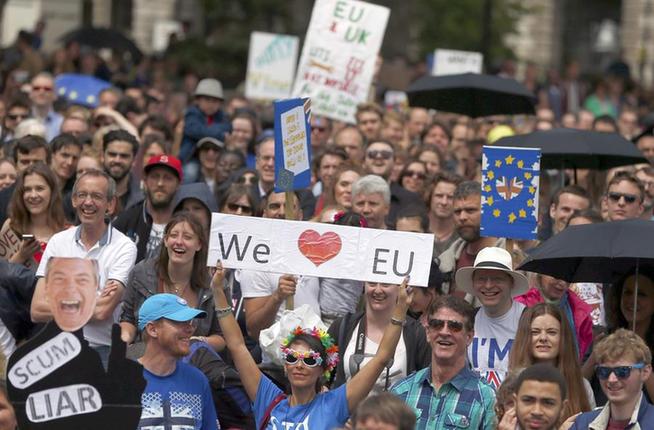
Parliament Square, in central London, Britain July 2, 2016. Britain voted to leave the European Union in the EU Brexit referendum. [Photo/Agencies] |
The Brexit referendum has split the UK down the middle. The divide is not just regarding membership in the European Union: that was only the symptom, not the cause. The split is largely between young-educated-urban as against older-less educated-rural, with globalisation largely beneficial for one side and harmful for the other. In the days since the vote, the UK has been broiling with insecurity and uncertainty, as it has become clear that there is no clear path for the UK to exit from the EU. The two sides have therefore not solidified into two opposing camps; the situation is too febrile for that.
Those who voted "Leave" are naturally pleased, and able to explain away financial market turbulence with some well-chosen statistics. With David Cameron tendering his resignation, matters have turned to choosing a successor, rather than determining the new shape of UK relations to the EU. Such is political reality. Grievously, there have been several examples of racist abuse and graffiti, with the fascist (though tiny) National Front party taking the result as a sign to stoke anti-immigrant feeling. Fortunately, the vast majority feel otherwise.
Meanwhile, Remain voters are largely unsure of how to proceed. Over two million have signed a petition demanding another referendum, though this looks highly unlikely. Others have been busy pointing out how the promises of the Leave campaign are falling apart. Still others are calling for the country to come together to get the best terms it can. But with events moving very quickly, and with the Labour Opposition enmeshed in a leadership crisis, there has been no unified response. Perhaps the most typical response has been, “While you may not get the outcome you wanted, the decision was based on a fair vote. That’s democracy, and we can be proud of that, at least.”
While this is true, it is notable that the commanding heights of British opinion were mostly for Remain, yet the country voted for Exit. The leaders of all the major parties, nearly all businesses, most of the serious newspapers, and most celebrities, from footballers to actors, advocated a vote to Remain. But the people of 2016 are less deferential than before. Even the visit of President Obama, with his warning that Exit would leave the UK “at the back of the queue” for trade negotiations, was dismissed: some felt insulted that he should come over to tell them how to vote. Ultimately, the Exit vote can best be explained as a “Peasants’ Revolt”, a howl of disgust by the marginalised. Globalisation has had a critical effect on British manufacturing towns, with good jobs shipped overseas and replacement employment in the service sector often insecure and unrewarding. Those affected were angry, disaffected, and had little to lose. They were fed up with being ignored. And now they have the ear of the world.
So, whither now? The strongest short-term effect (beyond market turbulence) may be in Scotland, which voted to Remain and saw calls for another independence referendum immediately after the vote. However, opinion polls do not yet put nationalists in a decisive lead, as they would require First Minister Nicola Sturgeon to countenance another vote. To lose one vote on independence might be misfortune; to lose two would settle the matter for many decades. But for the UK as a whole, the matter will come down to how much the EU wants the UK to remain. Even Leave campaigners now admit that they still want access to the EU’s single market of 500 million consumers. The EU, however, looks likely to refuse this without a balancing freedom of labour – for were it do so, other countries with anti-EU populist parties, such as the Netherlands, could vote the same way, leading to an unravelling of the whole euro area. What is likely, then, is that the UK will still have some access to the single market, perhaps as an “associate member”, while aiming to sharply reduce immigration. But how this can be fudged together, still less sold to a sceptical British public, is anyone’s guess.



Copyright 1995 - . All rights reserved. The content (including but not limited to text, photo, multimedia information, etc) published in this site belongs to China Daily Information Co (CDIC). Without written authorization from CDIC, such content shall not be republished or used in any form. Note: Browsers with 1024*768 or higher resolution are suggested for this site.
License for publishing multimedia online 0108263 Registration Number: 130349