On 11 April 2012, an earthquake of magnitude 8.6 off the coast of Indonesia provided a useful test of the IOTWS. Within 10 minutes of the quake, the countries at risk had received bulletins with tsunami warning information from the three regional service providers. In turn, millions of people received warnings and moved rapidly to higher ground. Fortunately no tsunami was triggered that day, but the experience suggests that real progress has been made since 2004.
At the national level, several countries have also made major investments in early warning systems, including setting up state-of-the-art warning centers, which have contributed to the Asia-Pacific region increasingly being considered a global hub for excellence in this field.
The tsunami also led to the creation of innovative funding mechanisms. Thanks to the Royal Thai Government’s contribution of US$ 10 Million, the ESCAP Trust Fund for Tsunami, Disaster and Climate Preparedness was launched in 2005. Pooling resources from multiple donors to strengthen multi-hazard early warning systems, the Trust Fund has supported 26 projects benefitting 19 Indian Ocean and Southeast Asian countries. The Fund supported the establishment of the IOTWS, and has provided targeted support to countries facing high risks, but with limited national capacity.
Despite this progress we must not forget the importance of local level, community-based risk reduction. This “l(fā)ast mile” of early warning systems – the vulnerable communities at risk – remains a critical gap in need of additional attention and resources. It must be a high priority to ensure that the most vulnerable communities receive timely and understandable warnings that they know how to act upon in times of crisis.
So ten years on, how much better prepared is the Asia-Pacific region for a major tsunami? Considerably better than we were in 2004, but the full answer will only be known one day in the future, during the first few hours after a strong earthquake has caused a new tsunami. To prepare for that day, regional cooperation is essential, especially in early warning, as natural hazards know no borders.
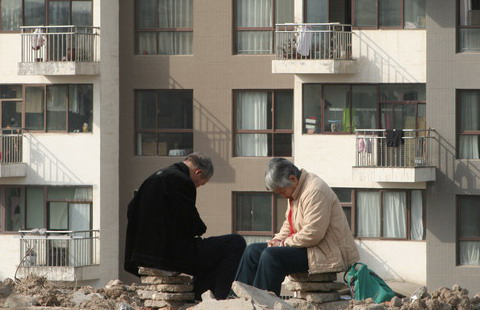
Working together to reduce disaster risk and build resilience is comparable to pushing a big rock uphill together -- if we do not constantly move forward, we risk sliding backwards. It involves developing a culture of preparedness and cooperation across the region, and shifting from a focus on response to a greater emphasis on prevention.
In June this year, the Royal Thai Government hosted the 6th Asian Ministerial Conference on Disaster Risk Reduction to consolidate the regional voice for a successor HFA agreement. As countries from around the world prepare to meet in Sendai, Japan in March 2015, the Asia-Pacific region will bring our essential lessons and experiences to help shape this new global framework.
Dr. Shamshad Akhtar, Under-Secretary-General of the United Nations and Executive Secretary of the United Nations Economic and Social Commission for Asia and the Pacific (UN ESCAP). She is also the UN’s Sherpa for the G20 and previously served as Governor of the Central Bank of Pakistan and Vice President of the MENA Region of the World Bank.
Note about the authors.
· Dr. Shamshad Akhtar, Under-Secretary-General of the United Nations and Executive Secretary of the United Nations Economic and Social Commission for Asia and the Pacific (UN ESCAP). She is also the UN’s Sherpa for the G20 and previously served as Governor of the Central Bank of Pakistan and Vice President of the MENA Region of the World Bank.
· General Tanasak Patimapragorn, Deputy Prime Minister and Minister for Foreign Affairs, Kingdom of Thailand
· Dr. Harsh Vardhan, Union Minister for Ministry of Science & Technology and Ministry of Earth Sciences, Republic of India
· Mr. Mahinda Amaraweera, Minister of Disaster Management, Democratic Socialist Republic of Sri Lanka
· Mr. Mohamed Zuhair, Minister of State, Ministry of Defence and National Security, National Disaster Management Centre, Republic of the Maldives
· Dr. Syamsul Maarif, Minister/Chief, National Agency for Disaster Management, Republic of Indonesia


Copyright 1995 - . All rights reserved. The content (including but not limited to text, photo, multimedia information, etc) published in this site belongs to China Daily Information Co (CDIC). Without written authorization from CDIC, such content shall not be republished or used in any form. Note: Browsers with 1024*768 or higher resolution are suggested for this site.
License for publishing multimedia online 0108263 Registration Number: 130349