|
 |
|
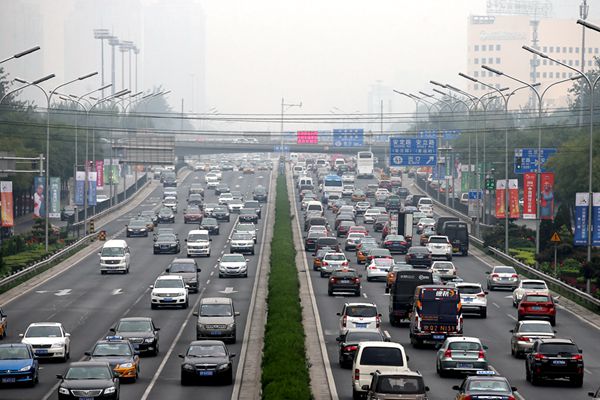
Traffic congestion slows the morning drive in Beijing on Monday. Wang Jing / China Daily |
Odd-even rule best for Beijing traffic
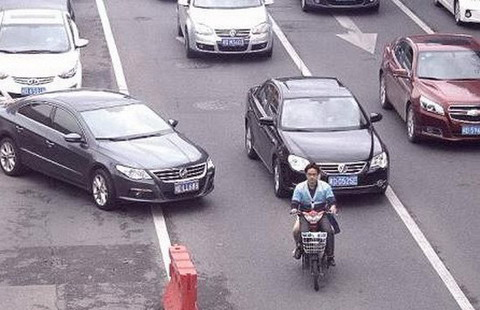
The Beijing municipal government is dicussing whether the odd-even license number driving rule should be made permanent. A recent Beijing Normal University report shows that an average Beijing resident spends 97 minutes traveling between home and office and that frequent occurrence of smog in many cities is threatening public health.
The odd-even plate number rule (or road space rationing) has proved effective in reducing air pollution in the short term — the results were evident during the Beijing 2008 Olympic Games and last month’s Asia-Pacific Economic Cooperation conference.
But many experts say the rule should not be made permanent because it would “violate people’s right to drive” because they can drive only on alternate days. There is a misunderstanding here. One person’s right to drive a car should not infringe upon another person’s right to enjoy clean air and smooth traffic. The very basis of civil rights is that people have to compromise on certain invidual rights for the collective benefit of society.
The economic measures proposed by some experts such as auctioning car number plates or charging congestion fees can also be seen as a violation of people’s rights. For instance, if the government charges congestion or other fees, it will increase the cost of owning a vehicle and thus deprive some people of the right to buy a car. And since people who live in the suburbs which are not well served by public transport have no choice but to buy a car no matter how high the additional fees are, they will have to bear the extra financial burden without seeing any reduction in the number of cars on the roads.
Besides, many say auctioning of licenese plates, a practice in place in Shanghai, can only limit the number of private cars because government agencies are still free to purchase as many cars as they want, which is against social justice.
Compared with the other suggested measures, the road space rationing is a better and more civil option. Article 39 of the Road Traffic Safety Law says: “The traffic administrative department of the public security organ may, in light of the specific circumstance of the road and the traffic flow, take such measures against motor vehicles, non-motor vehicles and pedestrians as directing the flow, restricting the passage or prohibiting the passage, etc. If, in the event of a large mass activity or large-scope construction, etc., it is necessary to take measures restricting the traffic, or to make a decision directly relating to the road traffic activities of the public, it shall be announced to the public in advance.”
Some experts say the law has given the government the right to regulate traffic according to requirements. Since the law doesn’t specify that the government can only take temporary steps to manage traffic, it can take permanent measures such as road space rationing.
Of course, that does not mean Beijing should implement the rule immediately. It is necessary to seek people’s opinions because the proposed move involve their rights. This can be done through democratic procedures, including opinion polls, hearings and open public debates, so that everyone gets a chance to voice his/her opinion on the the policy.
The author is a writer with China Daily. zhangzhouxiang@chinadaily.com.cn
 Considering money as the end is the tragedy

Copyright 1995 - . All rights reserved. The content (including but not limited to text, photo, multimedia information, etc) published in this site belongs to China Daily Information Co (CDIC). Without written authorization from CDIC, such content shall not be republished or used in any form. Note: Browsers with 1024*768 or higher resolution are suggested for this site.
License for publishing multimedia online 0108263 Registration Number: 130349