Formal nationwide fiscal reforms started in 1984 with the adoption of the Fiscal Responsibility System, which provided local governments with separate budgets and incentives to expand their own revenues. It was followed by the Fiscal Contracting System, designed in 1988 to address some of the issues that arose under the previous system, in particular decreasing fiscal revenue. However, because of its complexity it proved difficult to manage, leading to further drop in revenue collection.
In 1994, the successful Tax Sharing System was introduced, which was aimed at increasing fiscal revenue and the share accruing to the central government. It defined tax collection by central and local governments, and separated tax administration services at the central and provincial levels. It also introduced value-added tax (VAT) as a major source of government revenue. As a result, fiscal revenue has more than doubled as a percentage of GDP in the last 15 years.
But some relevant aspects of intergovernmental fiscal relations were not captured when the Tax Sharing System was designed, including the assignment of expenditure responsibilities and sub-national borrowing. In addition, new challenges have emerged.
Fiscal revenue is largely sourced from indirect taxes, which are regressive, undermining the efforts to balance income distribution. From the production point of view, taxes are biased in favor of manufacturing to the detriment of the service sector, which is subject to double taxation under the existing business tax.
The government has adopted a range of measures to address these challenges. Recent policy actions assigning more responsibility for social security at the central level are welcome. In ADB's view, ongoing pilot reforms - the replacement of business tax by VAT on selected services, and the introduction of a property tax in Shanghai and Chongqing - are important initiatives that need to be further developed.
But more needs to be done. The tax base should be broadened and taxation has to be made more progressive for the sake of social equity. The introduction of green taxation will make the growth model environmentally sustainable.
More importantly, revenue allocation to the local level needs to be aligned with expenditure responsibilities to curtail disparities in public social spending that could perpetuate inequality. Global experience shows that a clear assignment of expenditure responsibilities facilitates a more efficient organization and provision of public services, and helps address fiscal disparities.
Furthermore, increased spending on health, education, and pension will reduce pressure on low-income household budgets, encouraging consumption to balance the sources of growth, and provide the country with social stability and the economy with an important buffer against external shocks.
We at ADB are proud to be supporting ongoing government initiatives in China to develop a public finance strategy to promote inclusive balanced growth. We hope that joint efforts will effectively contribute to the realization of the Chinese Dream. And the Chinese Dream has to be financed through robust public finance reforms to be realized.
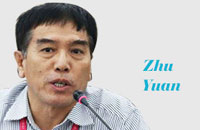
The author is director general of East Asia Department, Asian Development Bank.
(China Daily 11/04/2013 page9)
 New type of urbanization is in the details

Copyright 1995 - . All rights reserved. The content (including but not limited to text, photo, multimedia information, etc) published in this site belongs to China Daily Information Co (CDIC). Without written authorization from CDIC, such content shall not be republished or used in any form. Note: Browsers with 1024*768 or higher resolution are suggested for this site.
License for publishing multimedia online 0108263 Registration Number: 130349