 |
|
Ancient Villages in Southern Anhui (CNTV)
|
The Ancient Villages in Southern Anhui: the Huizhou-style architectural features were developed along with the thriving of Huizhou businessmen in the Ming and Qing dynasties, and are most demonstrated by exquisite design and excellent techniques in a limited construction space which really is a unique architectural form. Later, the Huizhou businessmen gradually declined but the Huizhou-style architecture was preserved in the ancient villages. Therefore, these ancient villages have important historical and architectural value.
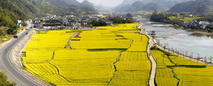
Xidi and Hongcun, which are among the Ancient Villages in Southern Anhui, are located in the Huangshan Scenic Area in Yixian county, Anhui province, eastern China. The two villages are the most representative among the Ancient Villages in Southern Anhui and have the typical regional culture of southern Anhui. They also are the carrier of Huizhou culture, the typical culture in late period of China's feudal society and embody exquisite Huizhou-style building features. These villages are well- preserved and have beautiful sceneries. The villagers respect Confucianism, emphasize education and have a prosperous style of writing, reflecting the cultural phenomenon in Huizhou in its period of great prosperity in Ming and Qing dynasties, including the feudal moral principles in the idealist philosophy, the religious culture of clansmen living together, the geomantic culture of village construction, as well as the Huizhou commercial culture of valuing both commerce and Confucianism. Therefore, they have deep historical and cultural deposits.
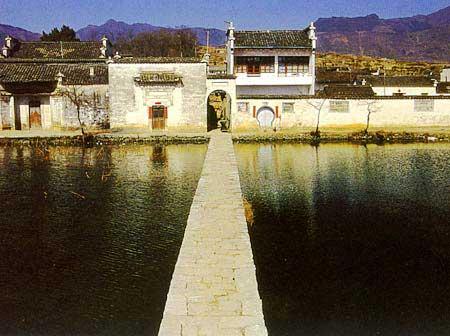
Xidi village is eight kilometers away from Yixian county and was built in the Northern Song Dynasty between 1049 A.D. and 1054 A.D. Most villagers in the village have the surname 'Hu' and there are more than 1,000 people from 300 households living in the village. The entire village is boat-shaped and surrounded by mountains with two rivers flowing through the village respectively from the north and east before converging at the Huiyuan Bridge in the south of the village. With north-south streets and two roads along the rivers as the main skeleton, the village has a street system that uses the eastern part as the main residence and then spreading towards the north and south. All of the streets and roads were paved with bluestones from Yixian County and most buildings are made of wood and decorated by brick walls, wood carvings, stone carvings and brick carvings. The streets and buildings have a harmonious design and layout, the spatial variation of the village is flexible and varied, and the color of the buildings is simple and elegant.
|