Cold tea? Herbal tea!
Updated: 2007-06-28 08:40
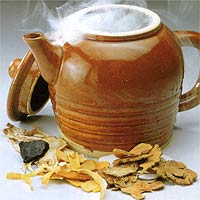 Do you know about cold tea? People outside Guangdong and Guangxi provinces tend to feel puzzled by the term. Some even take it as an antonym for hot tea.
But actually, cold tea is neither cold, nor a kind of tea. Known as herbal tea in Chinatowns and traditional Chinese medicine shops in western countries, it is a drink made with single or multiple local herbs to drive away the heat and humidity from the body in summer, or to relieve sore throats in winter.
Drinking herbal tea is a long cherished tradition in Lingnan, which covers Guangdong, Guangxi, Fujian and Taiwan provinces, with Guangdong as its core area. The tradition has been a major component of Lingnan culture. Others include Cantonese opera, Cantonese cuisine and Cantonese dialect. The popularity of herbal tea might largely be attributed to the warm and humid climate of the Lingnan area, which is thought to be the cause of the body's internal heat according to traditional Chinese medical thought.. Local people learn which kind of tea to drink for which condition from childhood.
Today, herbal tea is still an indispensable part of life for Lingnan people, especially in Guangdong and Guangxi provinces. Wanglaoji, Huangzhenlong and Shiqi herbal teas, as well as other traditional brands are still quite popular nowadays.
Along with roast goose and litchi, herbal tea is valued as one of the "three treasures of Guangdong." Besides a long history, herbal tea also has many varieties. In general idea, herbal tea not only refers to drinks, but also Guilinggao, a bitter-flavored dessert traditionally made out of turtle shell boiled in herbal medicine in form of a jelly, as well as other soups cooked with fish and vegetables.
Herbal Tea Stores
Some may wonder why Cantonese people drink herbal tea, as the unique bitter taste and dark appearance is anything but appetizing.
In the past, stores selling herbal tea were quite common in Guangdong. The stores usually took up two or three square meters, and did not have tables or chairs. Several big bronze jars were placed beside the counter, holding different kinds of herbal tea. In a typical teahouse bowls or glasses were laid on the counter. People came in, drank a bowl of herbal tea, and left the money to pay for it.
Nowadays, the stores are still quite small, but hygiene is a primary consideration. The introduction of different herbal teas and their various uses are written on a chart hanging on the wall. Dozens of tea pots are placed on the counter. Waiters and waitresses will reheat the herbal tea when it turns cold, since herbal tea functions more effectively when served warm. But in summer time, iced herbal tea is also available. The herbal tea sells from three to five yuan a cup, basically equal to the price of other beverages. Customers can consult with the sellers on which kind of herbal tea to drink according to their health conditions, or just come for a drink and a break.
Presently, there are nearly 1,000 chain stores selling over ten brands of herbal tea in Guangzhou, capital of Guangdong Province.

