|
 |
|
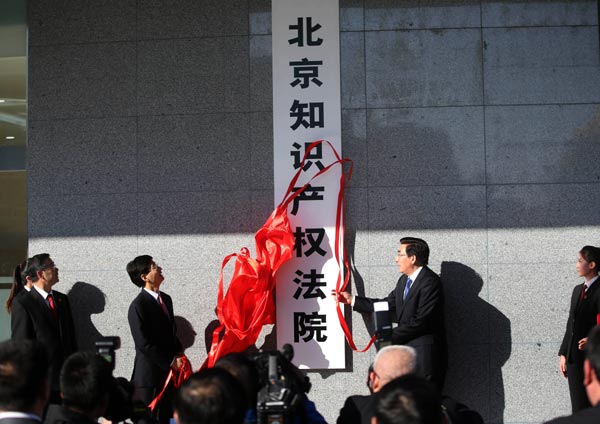
China's first-ever intellectual property court opened in Beijing on Nov 6. The new court is part of a pilot program for reforms to the judicial system, and has a mandate to deal with issues connected with patents and technical design disputes that are beyond the scope of the regular court system in China.[WANG GUIBIN/CHINA DAILY] |
Deep concerns
Ruan Chuansheng, a criminal lawyer in Shanghai, where the pilot program is also in operation, had a different perspective. He said some of his friends and colleagues in the courts and local justice departments are deeply concerned about the allocation system.
"Most of them are anxious about whether they will be selected as judges, because they think working as a legal assistant will mean their past efforts have all been in vain," said the 45-year-old, who has worked as a defense lawyer in criminal cases for about 12 years.
He confirmed that some Shanghai courts intend to base the allocation on length of service and seniority, "which is a restraint and not the original idea behind the reform," he said.
Employees' terms of service, including pay rates and promotion prospects, will also be amended, and some people are concerned about their futures, he added. Unsurprisingly, Ruan and his colleagues are waiting anxiously to see the results of the allocation process.
Since 2013, his employer, Shanghai Hengtai Law Offices, has engaged a small number of former junior judges who have abandoned court work for fear they will be penalized financially if they are "downgraded" to the role of legal assistant.
"They already find it hard to shoulder the cost of living in a big city, and the large reduction in the number of cases they will hear every year will make things even harder. After all, they need to earn enough to live," said Ruan, who used to work in a local court, referring to a change in the system that will see judges and legal assistants paid on the basis of their annual volume of work.
Although he has concerns about some of the proposed changes, Ruan said he's been delighted to witness a change in the attitudes of the courts, police and prosecutors toward lawyers over the past two years.
"In some trials, the judges and prosecutors interrupted me frequently when I was defending my client, and my applications to read case documents were also ignored," he said.
Guo Jie, a judge at a court in Sanming, Fujian province, said the reforms will give judges greater independence because they will no longer be required to report to court presidents, who review cases and advise on verdicts.
Although Guo's court is not involved in the pilot program, she said the reforms would result in sensible changes, especially by reducing the opportunity for senior judicial figures and local governments to influence proceedings and outcomes.
"Some of our departments have examined the reform that allows judges to give independent verdicts, and that will soon be extended across the entire court," she said.
One reform that's already been implement nationwide is that all verdicts and the reasoning behind them must be available online. That's resulted in judges providing extended explanations of their judgments, according to Guo.
"To ensure my verdicts are accurate and easily intelligible, I read them three times before I publish them on the website," she added.
Related Stories
Copyright 1995 - 2015 . All rights reserved. The content (including but not limited to text, photo, multimedia information, etc) published in this site belongs to China Daily Information Co (CDIC). Without written authorization from CDIC, such content shall not be republished or used in any form. Note: Browsers with 1024*768 or higher resolution are suggested for this site.
License for publishing multimedia online 0108263 Registration Number: 130349