


Caught in an unending twirl









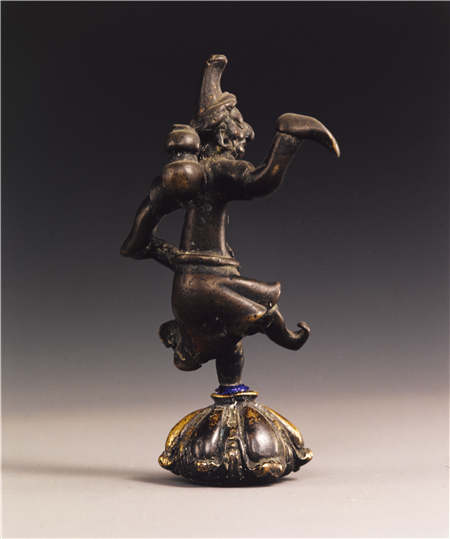
The Sogdians performed a special role on the stage of the ancient Silk Road
If the ancient Silk Road is a theater, then the Sogdians were its most dynamic performers. Monopolizing the trans-Eurasian trade route for half a millennium between the fourth and the eighth centuries, they left behind nothing but legends. Natural-born dancers, they entered history's stage just as they exited it - with a twirl.
This twirl captured the vivacity of their existence, reflecting the freewheeling, optimistic spirit of Chinese society of the day. Yet those who performed this twirl were ultimately blamed for the downward spiral that society eventually took.
However, before that heady performance, the Sogdian people - a group as hard to define as the ancient Silk Road - had dazzled with their commercial acumen and their utter determination in pursuing commercial goals.
They traveled vast distances - as much as 8000 kilometers - trading in almost everything and turning a profit in almost everything in which they traded.
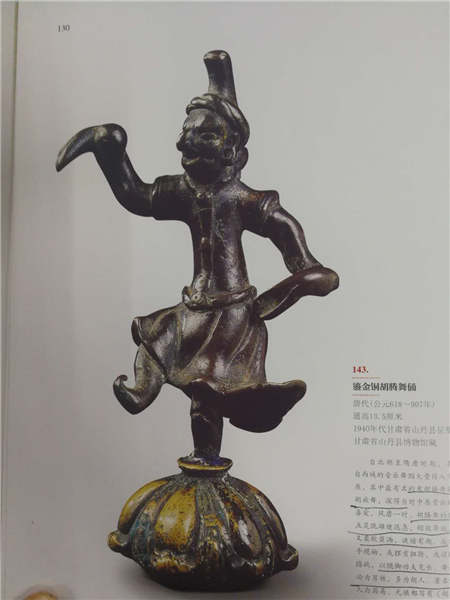
Rong Xinjiang, a professor of history at Peking University who has spent decades looking into the lives of the Sogdians, says: "Very often they are described as homeless, largely due to the fact that they were constantly on the road. But this is inaccurate. In fact the Sogdians, who spoke Eastern Iranian, hailed from basins of the Syr Darya and Amu Darya rivers in what is today Uzbekistan, Tajikistan and Kyrgyzstan, regions known in ancient Western literature as Sogdiana.
"It's true that they never had among themselves a strong army and therefore were vulnerable militarily, but this did not stop them from setting up a number of small countries, countries located in desert oases and largely dispersed in Central Asia. Among them, Samarkand, today the second-largest city in Uzbekistan, was the most well known."
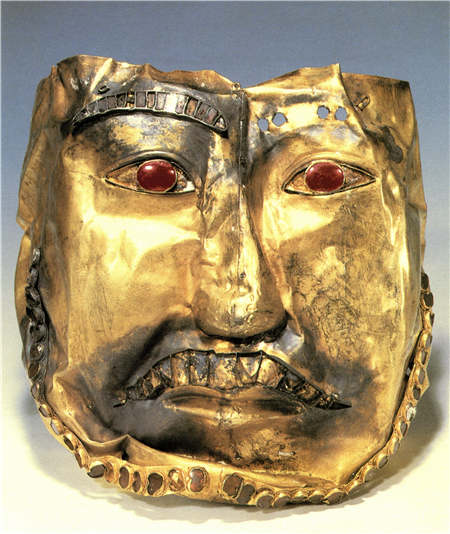
In many cases, military vulnerability meant political fickleness: historically, the Sogdians were always ready to form an alliance with, or to pledge allegiance to, foreign powers pounding on their door.
One example is the ancient kingdom of Loulan, later known as Shanshan, at the northeastern end of the Taklamakan Desert in Xinjiang Uygur autonomous region of northwestern China.
"The rulers of Loulan submitted their tiny kingdom first to the authority of the Han Empire (206 BC - AD 220), and then to Xiongnu, a confederation of Eurasian steppe nomads with whom the Chinese empire had been engaged in long-term conflict," Rong says. "For a certain period these two relationships overlapped.