Comments
  Print
Print  Mail
Mail  Large Medium Small
 |
|
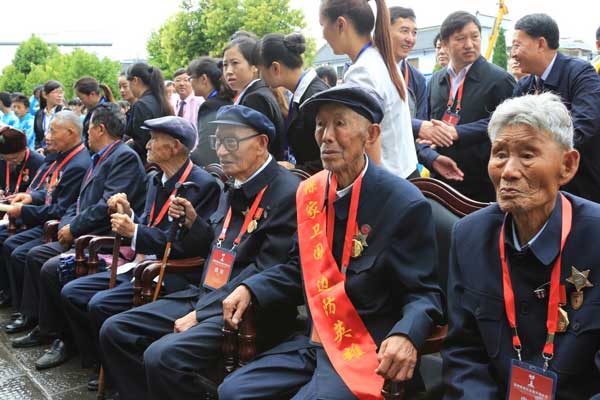
Veterans of the Chinese Expeditionary Force take part in an inauguration ceremony of the Western Yunnan War of Resistance against Japanese Aggression Memorial on Thursday, which marked the 68th anniversary of Japan's surrender in World War II. [LIU ZHENGFAN / FOR CHINA DAILY] |
|
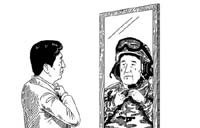 |
| Comment: Japan still disowns its dark past |
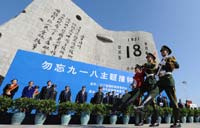 |
| Remembering a wound |
|
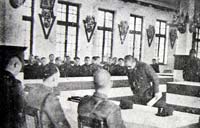 |
| Japan surrender site in E China |
The local Chinese troops fight heroically back and thus started Japan's all-out aggression against China and China's War of Resistance against Japanese Aggression.
On July 8, the Communist Party of China published an open telegram to the whole nation, calling upon the people of the whole country to rise in resistance against the Japanese aggression. On the initiative of the CPC, the Anti-Japanese National United Front formally established on the basis of the KMT-CPC cooperation.
The Japanese aggression caused 35 million deaths and casualties of Chinese people and US$600 billion of economic losses in China. China won the war eight years later.
China's War of Resistance against Japanese Agression (1937-45) was a righteous struggle against a war of aggression provoked by Japanese militarists against the will of the Japanese people. As for the Chinese, it was an anti-aggression war to defend state sovereignty and vindicate national honor.
The War of Resistance against Japanese Agression (1937-45) was a turning point in modern Chinese history. It ended the divided situation in which China found itself since the Opium War of 1840. It aroused the Chinese people, filled them with a common hatred against the enemy, and enhanced their traditional national spirit as never before.
The war was not merely a struggle between the Chinese people and the Japanese militarists or merely a local war between China and Japan. Viewed from the general situation of the international anti-Fascist struggle, China's War of Resistance against Japanese Agression was an important part of the war against aggression waged by people throughout the world, and the China theater was a major theater of decisive importance to World War II.
 Chinese lose sleep as they aim to achieve goals
 Balancing an egg on end during vernal equinox
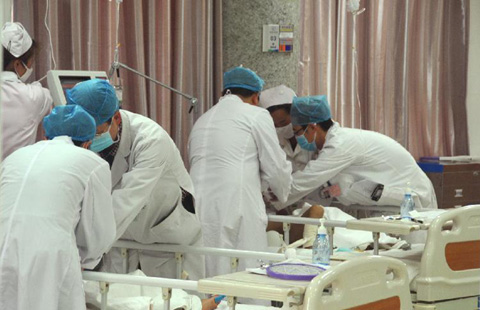 Children receive treatment after eating rat poison
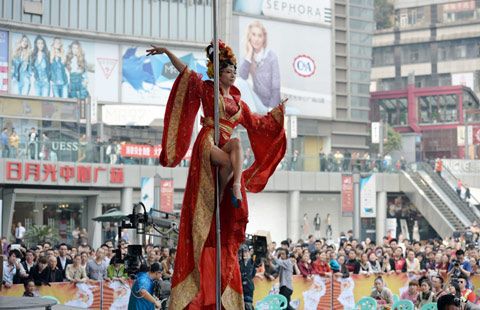 Men can be good pole dancers
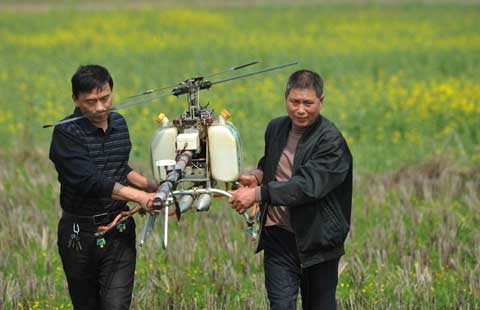 Farmer builds own drones to spray crops
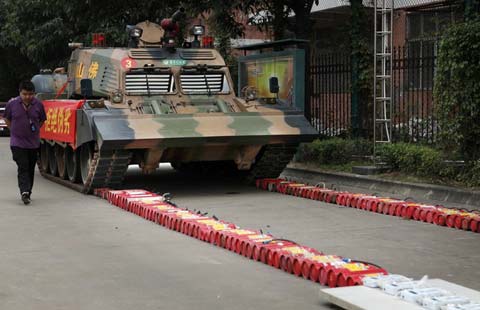 Tank flattens phony fire fighting gear
 No common health ills for kids given drugs
 Sand storm hits Xinjiang
Copyright 1995 - . All rights reserved. The content (including but not limited to text, photo, multimedia information, etc) published in this site belongs to China Daily Information Co (CDIC). Without written authorization from CDIC, such content shall not be republished or used in any form. Note: Browsers with 1024*768 or higher resolution are suggested for this site.
License for publishing multimedia online 0108263 Registration Number: 20100000002731