Workers, including children, forced to work 16-hour days
Poor migrant workers and children are being sold to factories in Thailand and forced to peel shrimp that ends up in global supply chains, including those of Wal-Mart and Red Lobster, the world's largest retailer and the world's largest seafood restaurant chain, an Associated Press investigation found.
At the Gig Peeling Factory, nearly 100 laborers from Myanmar were trapped, most working for almost nothing. They spent 16 hours a day with their aching hands in ice water, ripping the guts, heads, tails and shells off shrimp. One girl was so tiny she had to stand on a stool to reach the peeling table. Some workers had been there for months, even years. Always, someone was watching.
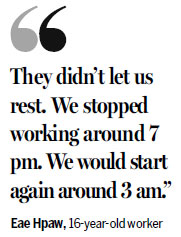
"They didn't let us rest," said Eae Hpaw, 16, her arms a patchwork of scars from shrimp-related infections and allergies. "We stopped working around 7 pm. We would take a shower and sleep. Then we would start again around 3 am."
More than 2,000 trapped fishermen have been freed this year as a result of an ongoing Associated Press investigative series into slavery in the Thai seafood industry. The reports also have led to a dozen arrests, millions of dollars' worth of seizures and proposals for new federal laws.
Pervasive human trafficking has helped turn Thailand into one of the world's biggest shrimp providers. Despite repeated promises by businesses and government to clean up the country's $7 billion seafood export industry, abuses persist, fueled by corruption and complicity among police and authorities. Arrests and prosecutions are rare. Raids can end up sending migrants without proper paperwork to jail, while owners go unpunished.
"I was shocked after working there a while, and I realized there was no way out," said Tin Nyo Win, 22, another former Gig factory worker, who routinely peeled 175 pounds of shrimp with his wife for just $4 a day.
UN, US standards
The farmed shrimp can mix with different batches of seafood as it is packaged, branded and shipped, making it impossible to determine where any individual piece was peeled. But because at least some of the Thai exporters' shrimp was processed by forced labor, all of it is considered associated with slavery, according to United Nations and US standards.
US customs records show the shrimp made its way into the supply chains of major US food stores and retailers such as Wal-Mart, Kroger, Whole Foods, Dollar General and Petco, along with restaurants such as Red Lobster and Olive Garden.
Import and export records from Europe and Asia are confidential, but the Thai companies receiving shrimp tracked by the AP all say they ship to those continents. AP reporters in Germany, Italy, England and Ireland found several brands sourced from Thailand in supermarkets in those countries.
The businesses that responded to AP's findings condemned the practices that lead to these conditions.
(China Daily 12/15/2015 page11)
Copyright 1995 - . All rights reserved. The content (including but not limited to text, photo, multimedia information, etc) published in this site belongs to China Daily Information Co (CDIC). Without written authorization from CDIC, such content shall not be republished or used in any form. Note: Browsers with 1024*768 or higher resolution are suggested for this site.
License for publishing multimedia online 0108263 Registration Number: 130349