|
 |
|
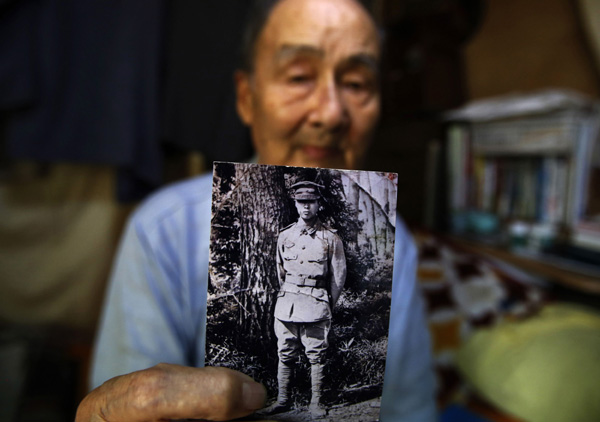
Tokuro Inokuma, 86, a former Imperial Japanese Army soldier, shows a photograph of him taken at the age of 15, at an Imperial Japanese Army Academy in Mito city in 1944, three months after he entered the academy, during an interview with Reuters at his home in Yokosuka, south of Tokyo July 30, 2014. Prime Minister Shinzo Abe last month took a historic step by ending a ban that has kept the military from fighting abroad since 1945. One of a dwindling number of World War Two veterans, Inokuma now finds troubling echoes in Tokyo's policy shift away from the pacifist ideals adhered to after 1945. Picture taken July 30, 2014. [Photo/Agencies] |
TOKYO - Tokuro Inokuma, a former Imperial Japanese Army soldier, got his first taste of the horrors of war in 1945 when he scrambled to gather up the scattered limbs of his fellow servicemen, blown apart by a US air raid in Japan. He was 16.
|
 |
| Nothing noble about kamikaze, says former Japanese pilot |
|
 |
| Ex-Japanese PM: Abe should not visit Yasukuni Shrine |
One of a dwindling number of World War Two veterans, Inokuma now finds troubling echoes in Tokyo's policy shift away from the pacifist ideals adhered to after 1945.
"I find it quite dangerous ... This is the path we once took," said Inokuma, who fought in China soon after the deadly air strike, and survived two years in concentration camps in the then-Soviet Union following Japan's surrender.
Prime Minister Shinzo Abe last month took a historic step by ending a ban that has kept the military from fighting abroad since 1945. The move has riled China, whose ties with Japan have been frayed by a territorial row over East China Sea.
"We have neither killed nor been killed (in battle) for almost 70 years. That's unprecedented. It's important we think hard about that," said 86-year-old Inokuma.
Proponents say Japan needs to be able to exercise its right of collective self-defence, or helping a friendly country under attack, to respond to a tougher security environment.
Critics say the change makes Japan more likely to get sucked into overseas wars.
Teru Hisato, a 91-year-old veteran who lost his right leg to a US incendiary bomb in 1945 when he was guarding military supplies at a railway station in northern Japan, shares those concerns and doubts whether the policy shift makes Japan safer.
"If you raise your fist in response to your opponent's fist-lifting, that only leads to a fight."
Hisato also wants Abe to refrain from visiting Yasukuni Shrine for war dead, seen by critics as a symbol of Tokyo's wartime aggression.

Copyright 1995 - . All rights reserved. The content (including but not limited to text, photo, multimedia information, etc) published in this site belongs to China Daily Information Co (CDIC). Without written authorization from CDIC, such content shall not be republished or used in any form. Note: Browsers with 1024*768 or higher resolution are suggested for this site.
License for publishing multimedia online 0108263 Registration Number: 130349