Russia has blocked the release of a film about the deportations of ethnic groups during World War II, calling it a falsification of history.
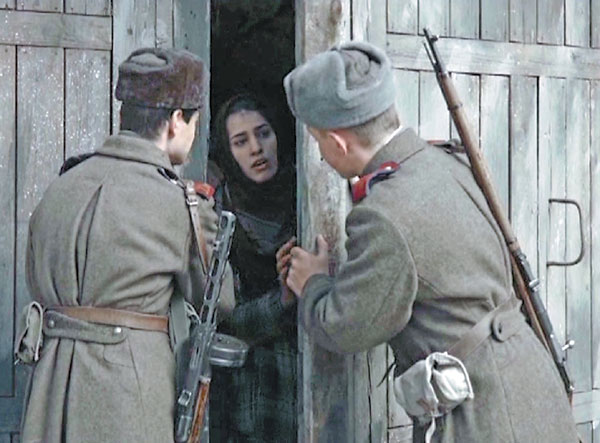
The Russian-made historical drama shot in Chechnya details the deportation of the Chechen and Ingush ethnic groups from the North Caucasus to Central Asia in the winter of 1944, as they were accused of lacking loyalty to the state.
A Russian culture ministry official condemned the film as "historical falsification" in a letter shown to AFP by the film's scriptwriter and producer, Ruslan Kokanayev.
|
A photo provided by film producer Ruslan Kokanayev shows a scene from Ordered to Forget, a movie about the mass deportations of the Chechen and Ingush ethnic groups on Stalin's orders during World War II. Ruslan Kokanayev / Agence France-Presse |
"We consider the film will promote ethnic hatred," wrote Vyacheslav Telnov, director of the ministry's cinema department, in the letter in response to a request for a release certificate.
Titled Ordered to Forget, the film was intended to mark the 70th anniversary of the deportations this year.
The culture ministry, which licenses cinema releases, singled out a scene in the film in which 700 people were killed in the Chechen mountain village of Khaibakh in 1944.
The ministry said it had searched three Russian state archives, including the files of the NKVD security forces that carried out the deportations and then Soviet leader Josef Stalin's personal files, and found no record of the event.
"As a result of the investigation, no documents were discovered proving the fact of the mass burning of residents," the ministry said.
"This allows us to conclude that claims of this 'event' are a historical falsification."
However, Larisa Khon, an advisor to Culture Minister Vladimir Medinsky, told the Kommersant daily that the ministry had not made a final decision on the film and would carry out a further expert assessment.
'Accepted fact'
But Alexander Cherkasov of rights group Memorial told AFP the Khaibakh massacre "is considered a generally accepted fact".
"On Feb 23 (1944), snow fell in the mountains and it was difficult to move the people out on foot. They brought out the men, but set fire to those who could not walk," Cherkasov said.
"It is only possible to argue about the numbers of the dead."
The film's makers were taken aback by the decision.
"I didn't expect it because we were sure we'd get a distribution license, because these facts are known," Kokanayev said by telephone from Grozny.
"I intend to contest this ban," Kokanayev said. "We will go to court and show that we are in the right."
The history graduate from Chechen State University in Grozny also denied that the film could incite ethnic hatred of Russians.
"The film can't be anti-Russian because it doesn't say one nation killed another nation," he said. "Some Russians behaved well towards those deported."
The film was financed by "private investors in Grozny and Moscow", he said. "We didn't have any financing from the (state) budget."
Unusual for a moviemaker, the 52-year-old works as the head of a municipal district in Chechnya.
The makers of Ordered to Forget have submitted it to a number of film festivals both in Russia and abroad, including the Moscow International Film Festival and the Venice Film Festival.

Copyright 1995 - . All rights reserved. The content (including but not limited to text, photo, multimedia information, etc) published in this site belongs to China Daily Information Co (CDIC). Without written authorization from CDIC, such content shall not be republished or used in any form. Note: Browsers with 1024*768 or higher resolution are suggested for this site.
License for publishing multimedia online 0108263 Registration Number: 130349