WORLD> America

|
WORLD> America
|
|
Related
Senate bows to Bush, approves surveillance bill
(Agencies)
Updated: 2008-07-10 14:01 WASHINGTON - Bowing to President Bush's demands, the Senate approved and sent the White House a bill Wednesday to overhaul bitterly disputed rules on secret government eavesdropping and shield telecommunications companies from lawsuits complaining they helped the US spy on Americans.
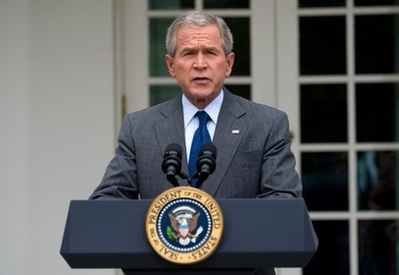
The relatively one-sided vote, 69-28, came only after a lengthy and heated debate that pitted privacy and civil liberties concerns against the desire to prevent terrorist attacks. It ended almost a year of wrangling in the Democratic-led Congress over surveillance rules and the president's warrantless wiretapping program that was initiated after the Sept. 11, 2001, terrorist attacks. The House passed the same bill last month, and Bush said he would sign it soon. Opponents assailed the eavesdropping program, asserting that it imperiled citizens' rights of privacy from government intrusion. But Bush said the legislation protects those rights as well as Americans' security. "This bill will help our intelligence professionals learn who the terrorists are talking to, what they're saying and what they're planning," he said in a brief White House appearance after the Senate vote. The bill is very much a political compromise, brought about by a deadline: Wiretapping orders authorized last year will begin to expire in August. Without a new bill, the government would go back to old FISA rules, requiring multiple new orders and potential delays to continue those intercepts. That is something most of Congress did not want to see happen, particularly in an election year. The long fight on Capitol Hill centered on one main question: whether to protect from civil lawsuits any telecommunications companies that helped the government eavesdrop on American phone and computer lines without the permission or knowledge of a secret court created by the Foreign Intelligence Surveillance Act. The White House had threatened to veto the bill unless it immunized companies such as AT&T Inc. and Verizon Communications Inc. against wiretapping lawsuits. Forty-six lawsuits now stand to be dismissed because of the new law, according to the American Civil Liberties Union. All are pending before a single US District Court in California. But the fight has not ended. Civil rights groups are already preparing lawsuits challenging the bill's constitutionality, and four suits, filed against government officials, will not be dismissed. Numerous lawmakers had spoken out strongly against the no-warrants eavesdropping on Americans, but the Senate voted its approval after rejecting amendments that would have watered down, delayed or stripped away the immunity provision. The lawsuits center on allegations that the White House circumvented US law by going around the FISA court, which was created 30 years ago to prevent the government from abusing its surveillance powers for political purposes, as was done in the Vietnam War and Watergate eras. The court is meant to approve all wiretaps placed inside the US for intelligence-gathering purposes. The law has been interpreted to include international e-mail records stored on servers inside the US "This president broke the law," declared Sen. Russell Feingold, D-Wis. The Bush administration brought the wiretapping back under the FISA court's authority only after The New York Times revealed the existence of the secret program. A handful of members of Congress knew about the program from top secret briefings. Most members are still forbidden to know the details of the classified effort, and some objected that they were being asked to grant immunity to the telecoms without first knowing what they did. Pennsylvania Republican Sen. Arlen Specter compared the Senate vote to buying a "pig in a poke." |