New era diplomacy to strengthen ties with CEE countries
Levels of cooperation intensity differ

Iulia Monica Oehler-Sincai
Even though we cannot talk yet about a multi-speed 16+1 process, it is obvious that Central and Eastern European countries manifest different degrees of cooperation intensity with China, in accordance with their interests and objectives. There are many determinants of this distinction and most of them are correlated.
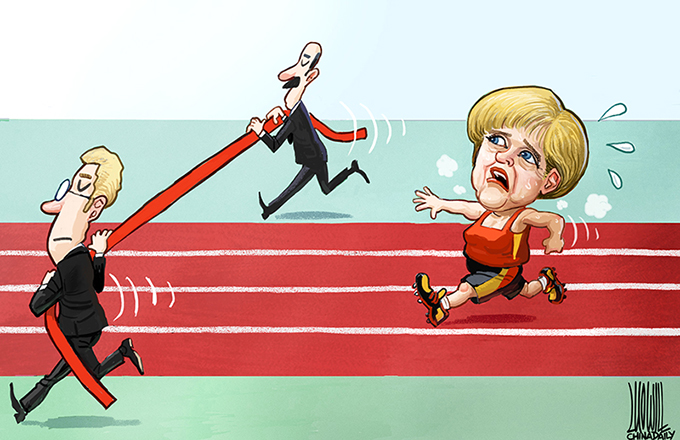
By analyzing the lists of implemented measures of the recent guidelines for cooperation between China and CEE, the number of coordinating bodies hosted by each CEE country and the pace of fulfilling the undertaken commitments, one can identify four groups: active participants such as Poland, Hungary, the Czech Republic and Serbia; ambitious partners such as Romania, Latvia, Slovenia, Bulgaria and Macedonia; the followers; and the laggards.
This is due not only to different interests, but also to fundamentals like the European Union-United States-NATO stance, the "Russia factor", the "Ukraine factor" and the migration issue. Since the start of the Ukraine crisis in 2014, the CEE countries' positions toward Russia and the US have become clearer.
At the same time the refugee crisis which accompanied the "Arab Spring" induced a more clear-cut position toward the EU institutions and integration process, as demonstrated by the critical attitude of the "Visegrád countries" (the Czech Republic, Hungary, Poland and Slovakia-all Euroskeptics) toward the EU. In many cases, there were complementary alternatives to the existent partnerships. For instance, Serbia pursues its goal of becoming an EU member but at the same time it is engaged in spurring cooperation with China and Russia.
There are also factors stemming from the EU membership for the eleven CEE countries participating in the 16+1 mechanism (for instance, rules on state aid, state guarantees and public procurement) as opposed to the relative freedom of the five Balkan states of the 16+1 framework, which are in the EU waiting room. Besides, the companies of the CEE countries still have to understand the "spirit of doing business" in China and vice-versa.
Three main conclusions result from this brief evaluation. First, the heterogeneity of the group does not enable a unitary approach, which means the bilateral format is the main alternative of cooperation between China and the CEE countries, on a "case to case" basis. The 16+1 framework remains in an exploratory phase, even if its objectives have become clear enough through the successive guidelines of cooperation. Second, the economic cooperation might be significantly intensified if the "spirit of doing business" in the partner country/region is understood. And third, there is no doubt the 16+1 platform clarifies what are the participants' expectations from cooperation, and also how to overcome barriers, risks and possible misunderstandings in the process of joint actions.
The author is a senior researcher at the Romanian Academy, Bucharest.