Diplomacy in full swing in new era
 |
|
Li Haidong, a professor at the Institute of International Relations at China Foreign Affairs University |
The diplomacy of major-country relationship with Chinese characteristics, too, has begun to bear fruit. Not only did Xi and Trump see the signing of a record $253.5 billion of business deals, their interaction and personal rapport also struck a promising note for arguably the world's most important bilateral ties. While Xi reiterated Beijing's faith in a community of shared future for humanity during his visit to Vietnam and Laos, Li's visit to the Philippines showed China will make all efforts possible to help shape such a community.
Free trade is still the foundation of Asia-Pacific integration, and China will and has the capability to safeguard it. It is equally important to make security arrangements without political strings attached and granting economies the right to choose their path to free trade.
For the integration to be more inclusive and for multinational mechanisms to reinforce each other, China could use its economic prowess, political influence and decent growth prospects to guide the region, when need be, through uncharted waters. It is also necessary to keep the door open to prospective participants outside the region.
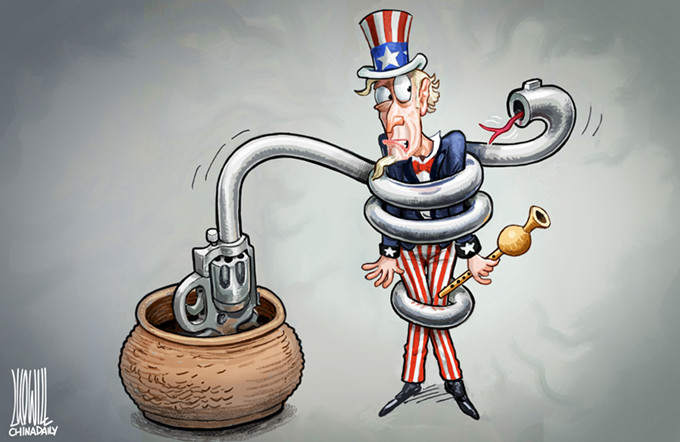
But instead of using "Asia-Pacific" to describe Washington's Asian policy like his recent predecessors did, Trump is using "Indo-Pacific", indicating his administration will seek to build a comprehensive structure in line with US values and long-term interests with India.
How far the possible quadrilateral alliance, which also includes Japan and Australia, will go and its strategic implications for Asia-Pacific economic integration are to be debated. The real intention of Washington is to maintain its regional leadership, mainly through its allies' efforts, which may put a strain on the alliance in the making.
- Open up new vision for diplomacy with Chinese characteristics in the new
- EU could take a leaf out of China's book on diplomacy
- EU could take a leaf out of China's book on diplomacy
- Diplomacy will be more effective in new era
- Diplomacy will be more effective in new era
- Xi's APEC summit attendance, Vietnam visit to show characteristics of Chinese diplomacy: ambassador