Diplomacy will be more effective in new era
 |
A country's diplomacy is the extension of its domestic politics. And China is keenly aware of the importance of its economic development as, in his report to the 19th Party Congress, General Secretary Xi Jinping said China will not become a strong socialist country before 2050. Until then, China will continue to address the contradiction between people's desire to lead a better life and inadequate, unbalanced economic development.
Despite being the world's second-largest economy, China considers itself a developing country, and hence its diplomacy will be sober-minded and pragmatic. China still has a long way to go to become a developed country, and its diplomacy will remain that of a developing country. However, that will not prevent China from playing an active role in promoting globalization and economic development, or fighting climate change and other threats to humanity.
Besides, China will continue to further open up to the outside world, as indicated by the 19th Party Congress. China needs a peaceful external environment to continue to take measures to boost domestic demand. Rather than becoming more aggressive globally, it will try to strike the right balance between domestic and foreign policies.
Also, major-country diplomacy with Chinese characteristics will be characterized by greater strategic, systemic and holistic designs. Instead of making national policies based on hotspot issues, it will view hotspot issues and bilateral disputes against a bigger picture and framework of peaceful development.
In other words, it will promote world peace by dealing with key issues of global human development through multilayered, all-round diplomatic arrangements, from a long-term and institutionalized approach, which would ease and/or resolve regional disputes. A pattern of benign interactions between China and the rest of the world has already been established, and a close bond of common prosperity will grow with the passage of time. As such, China will leap forward while promoting fairer, more balanced development.
Moreover, major-country diplomacy with Chinese characteristics has two salient features. As Foreign Minister Wang Yi said, these features signify a new type of international relations aimed at building a community of shared future for humanity.
This new type of international relations is aimed at proving false the contention that a rising power is destined to clash with an established one, and that a strong country will necessarily bully smaller ones. China is determined to avoid zero-sum games and establish win-win cooperation with the international community. It will also try to blaze a trail different from those of traditional powers. And it will forsake such traditional practices as colonization, and building spheres of influence or traditional alliances, or basing its prosperity on other countries' poverty and security on others' insecurity.
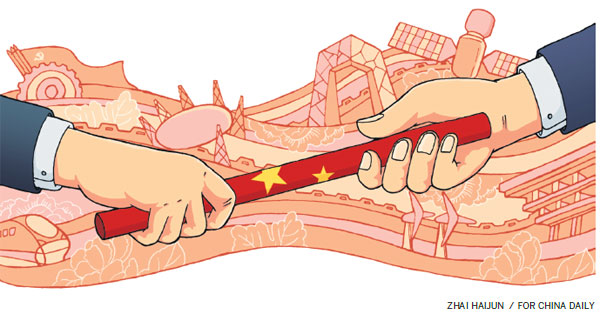
The concept of building a global community of shared future was put forward by Xi after the 18th Party Congress, which received full endorsement at the 19th Party Congress. But that doesn't mean China will negate traditional diplomacy. Instead, it will extend and develop it.
With the guidelines of the 19th Party Congress, Chinese diplomacy will continue to contribute to global peace and development.
The author is vice-president of China Foreign Affairs University.
Source: chinausfocus.com