 |
|
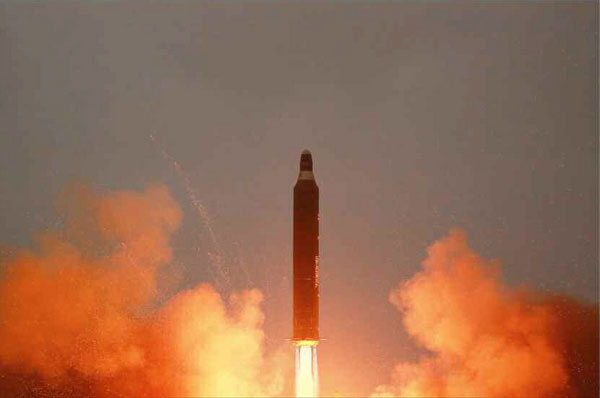
A surface-to-surface medium- and long-range ballistic missile Pukguksong-2 is test-fired by DPRK on Jan 12, 2017. [Photo/VCG] |
The Iranian nuclear deal, finalized between Teheran and six world powers on April 2, 2015, is two years old. While people's memories of the diplomatic triumph over what had become a dangerous nuclear issue are still fresh, the landmark deal now faces uncertainties because of the changing stance of the United States, which played an important role in making it reality.
US President Donald Trump, from his campaign trail days, has been saying he plans to "dismantle" the deal. And analysts say that even though he may not be able to scrap a multilateral deal, he can find ways to "violate" it, which in turn will make it difficult for the US to uphold it.
On March 23, Republican Senator Bob Corker submitted a bill titled Countering Iran's Destabilizing Activities Act to the US Senate Foreign Relations Committee, which had received more than a dozen co-sponsors in just a few days. The bill could allow Trump to re-impose sanctions on Iran, including those set to expire under the Iranian nuclear deal by adding new conditions that must be met before Washington lifts the sanctions on certain Iranian parties.
Such a bill will no doubt anger Iran. Even some US media outlets have said such a move is tantamount to an open declaration of conflict with Iran. The Iranian nuclear deal, deemed one of the most important legacies of former US president Barack Obama, is the result of years of strenuous negotiations among the P5+1 countries (China, France, Russia, the United Kingdom, the US plus Germany), the European Union and Iran.
During the course of the negotiations, all the participating parties demonstrated strong political will and spirit of diplomacy. The final round of talks alone spanned 20-plus months. And negating the result of such painstaking efforts could dim the hopes that similar gnawing issues the world faces today can be resolved peacefully.
The Iranian nuclear deal formally came into force in July 2015, and there is ample evidence to show Iran has been fulfilling its commitments and following the timetable to dismantle its nuclear infrastructure.
The Iranian nuclear deal raised the world's hopes that the Korean Peninsula nuclear issue can be resolved peacefully. But compared with the Iranian nuclear issue, the DPRK problem seems more complicated and volatile, and is becoming graver with each passing day. In its latest provocative move, the Democratic People's Republic of Korea test-fired a ballistic missile on Wednesday, but even before that, Trump had warned that the US will act alone if China "did not" help resolve the issue.
Washington has apparently hardened its stance on Pyongyang since Trump took office. Last month, US officials said all options are on table, including military ones, triggering speculation that the White House is changing course on the DPRK issue.
The fact is, the US and the Republic of Korea have been following a policy of containment and retaliation-a vicious circle-against the DPRK. Complicating matters is Seoul's decision to deploy the US' Terminal High Altitude Area Defense anti-missile system on the ROK soil, which has driven China-ROK ties to its lowest point in years. Besides, the long-standing distrust between Pyongyang and Washington has prompted the former to view every military maneuver by the US and the ROK as a plot targeted against Pyongyang.
The situation on the peninsula has reached such a dangerous point that Foreign Minister Wang Yi described the two contesting sides as "two accelerating trains heading toward each other with neither side willing to give way". A collision between the "trains" will do neither party any good; instead, it will leave both licking their wounds and calculating the severe costs.
All parties therefore should exercise utmost restraint, as any misstep at this stage could lead to irreversible consequences. Exercising restraint and holding meaningful multilateral talks are the best ways to prevent the "train" collision and to work out a diplomatic solution to the problem.
The author is a senior writer with China Daily.
wanghui@chinadaily.com.cn



Last weekend, I was hanging out downtown with a friend and my sister. We were walking through a public spare when all of a sudden a heated argument between a student and a middle-aged woman arrested our attention.
Copyright 1995 - . All rights reserved. The content (including but not limited to text, photo, multimedia information, etc) published in this site belongs to China Daily Information Co (CDIC). Without written authorization from CDIC, such content shall not be republished or used in any form. Note: Browsers with 1024*768 or higher resolution are suggested for this site.
License for publishing multimedia online 0108263 Registration Number: 130349