Guangdong leads the way in handling contaminated soil
 |
|
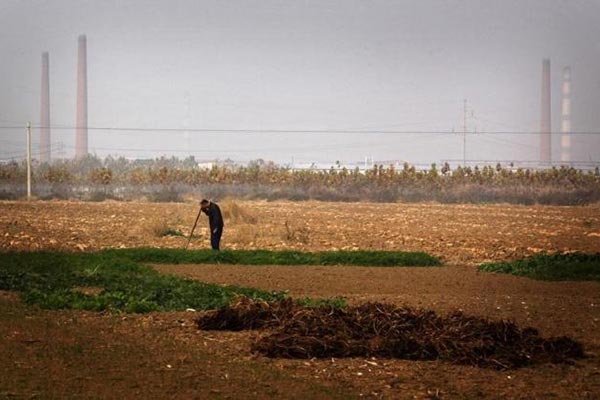
A farmer leans on his shovel as he takes a break from turning soil to plant crops in the town of Tianying, Anhui province, in this file photo dated November 19, 2012. [Photo/Agencies] |
Half a year after the State Council, China's Cabinet, issued a national soil pollution prevention action plan, the Guangdong provincial government in South China has published a detailed implementation plan on its website. Southern Metropolis Daily comments:
China has experienced rapid economic growth since the early 1980s, but the harmful side effects of that growth have become increasingly evident. One of those unwanted side effects is soil pollution.
Official data show that 16.1 percent of the soil nationwide is affected, of which 1.1 percent is heavily polluted. And heavy metals are major contaminants that not only harm the ecology, but also pose potential threats to the health of residents.
Especially, in relatively industrialized regions such as the Pearl River Delta, located in Guangdong province, many plants have moved away after having polluted the soil.
The central government has been paying ample attention to the problem of soil pollution. In June, a milestone national soil pollution prevention action plan was passed.
The 2016 national budget for the treatment of soil pollution is 9.1 billion yuan ($1.3 billion), almost 2.5 times that of 2015.
Now Guangdong has become the first province to make its own plan to address soil pollution. It has not only set the short-term objective of curbing all soil pollution in the province by 2018, but also listed specific measures for specific industrialized areas such as the delta.
More importantly, it has set legal conditions for developing on polluted land. If any commercial developer wants to construct a building on polluted land, it must test the soil first, draft a plan for remediation and rehabilitation, and pass an evaluation of the soil after treatment. The whole process should be transparent.
Of course, these measures need strict implementation in order to be effective, and we hope the Guangdong provincial government will be diligent in implementing the plan.
We hope Guangdong province will set a cooling-off period for polluted land before it is made available for commercial use again, which is a common practice in some of the developed countries, so as to better protect people's lives and health.