US and EU may resort to more trade battles
 |
|
SONG CHEN/CHINA DAILY |
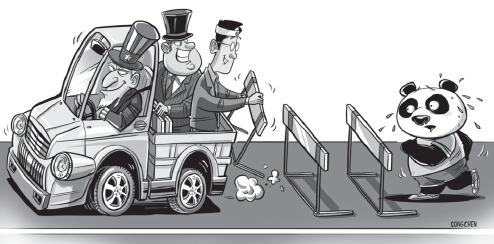
When China joined the World Trade Organization on Dec 11, 2001, it was told that it would be recognized as a market economy after 15 years. Until now the main players in world trade, especially the United States and the European Union, have not only denied China the market economy status but also initiated a large number of anti-dumping investigations against Chinese products and imposed extraordinarily high tariffs to block their sales.
So now that China has completed 15 years in the WTO, the US and the EU should grant China the market economy status. However, the two dominant trade players seem keen to continue the unfair game even though China should no longer be subjected to the discriminatory rule.
Since the US and the EU do not see China as a market economy, they often use production costs of other countries as reference to assess whether Chinese exporters are dumping their products. For example, considering the cost of a Chinese producer making a washing machine is 1,500 yuan ($217.7), it cannot be accused of dumping if it sells it in the EU market for 2,000 yuan. But if investigators take the cost of production in Singapore, which could be more than 2,000 yuan, as reference, then the Chinese producer can face dumping charges.
Such a surrogate country approach may have been in line with the WTO rules until Sunday, but China should now be treated as a market economy.
According to Paragraph (a) (ii) of Article 15 in China's Accession Protocol to the WTO, "the importing WTO Member may use a methodology that is not based on a strict comparison with domestic prices or costs in China if the producers under investigation cannot clearly show that market economy conditions prevail in the industry producing the like product with regard to manufacture, production and sale of that product".
But Paragraph (d), says, "in any event, the provisions of subparagraph (a) (ii) shall expire 15 years after the date of accession".
This means the discriminatory approach should automatically expire on Dec 11. But starting from 2011, an increasing number of officials and experts from the US and the EU have been interpreting the WTO rules differently, arguing that even after the expiry of the clause, they are not bound to grant China the market economy status and stop using the surrogate country approach in trade and dumping disputes.
And last month, US Commerce Secretary Penny Pritzker said the time was "not ripe" for the US to grant China the market economy status. The US has also been pushing the EU not to recognize China as a market economy.
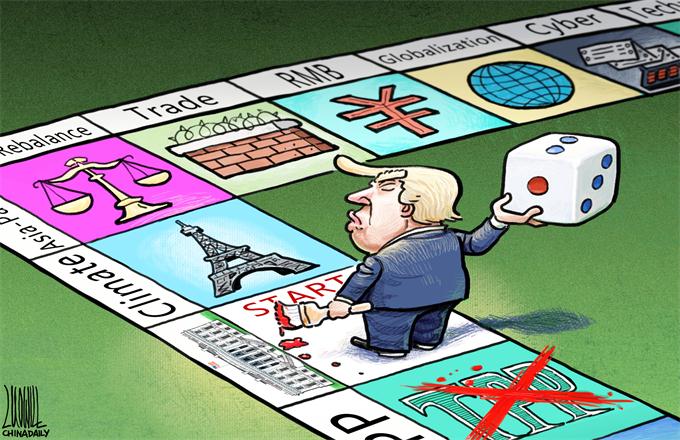
The US' insistence is not surprising, especially given the rising protectionism rhetoric in the US following the election of Donald Trump as the next president. Besides, if the US grants the market economy status to China, the EU will follow, making it much more difficult for them to protect their uncompetitive domestic industries because they can no longer impose high tariffs on Chinese products.
Eight years after the global financial crisis, the world is still trapped in low growth. Global trade grew by just 2.8 percent year-on-year in 2015, the fourth consecutive year when global trade growth was lower than economic growth. And WTO estimates that global trade growth may slow to 1.7 percent in 2016.
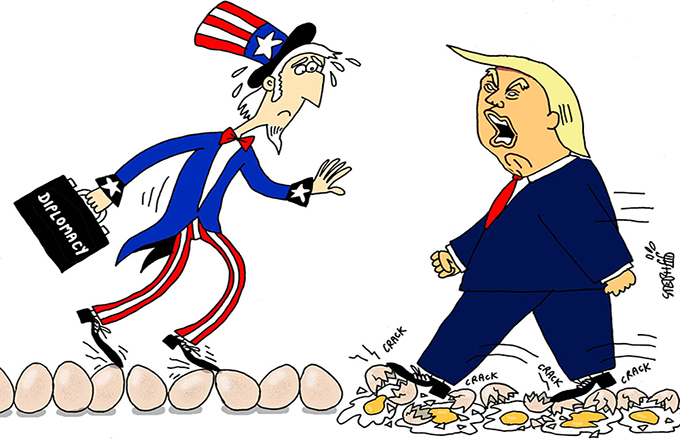
As a result, politicians in developed countries have sought to soothe the nerves of their anxious voters, especially industrial workers, by taking a more isolative approach to tackle trade challenges. Such a stance is most evident in the US, with Trump even threatening to engage in trade war with China if it does not "toe" the line.
The trend of protectionism, once it rises, will not recede easily. Therefore, market economy status or not, Beijing should be prepared for more disputes in the future because even if the EU went against the wish of the US and recognized China as a market economy, it will probably revise its laws to make room for taking other forms of punitive actions against Chinese goods.
The author is a senior writer with China Daily.
xinzhiming@chinadaily.com.cn