Western countries lose more than credibility by rejecting China as market economy
Should the US, Europe and Japan recognize China as a country of market economy?
There is a simple and clear answer to this question. In Article 15 of the Protocol on the Accession of the People's Republic of China to the WTO, subparagraph (a) and subparagraph (b) make it clear that “in any event, the provisions of subparagraph (a) (ii) shall expire 15 years after the date of accession.”
In other words, after 15 years have passed since China’s accession to the WTO, which will occur on Dec. 11, 2016, other parties should accept the price and cost of Chinese industries under investigation instead of using the Surrogate Country System when it comes to anti-dumping or counter vailing cases against China. This means that WTO members should recognize China as a market economy. With their signatures on the Protocol, the US, Europe and Japan should fulfill their promise to the international community.
The excuses raised by these countries to deny China’s status as a market economy are self-contradictory. For example, the US referred to the legal basis of the Tariff Act of 1930, including “the extent to which the currency of the foreign country is convertible into the currency of other countries; the extent to which wage rates in the foreign country are determined by free bargaining between labor and management; the extent to which joint ventures or other investments by firms of other foreign countries are permitted in the foreign country; the extent of government ownership or control of the means of production; the extent of government control over the allocation of resources and over the price and output decisions of enterprises.”
However, it only takes basic knowledge of the current economic situation in China to see how ridiculous these regulations are. Take the convertibility of RMB as an example. China first achieved RMB convertibility in 1996, and loosened the regulations on capital account convertibility in recent years. Otherwise, China wouldn’t achieve trillions of USD in imports annually (last year the number was nearly $1.7 trillion) or hundreds of millions of outbound tourism trips each year and increasing FDI, nor would China make more and more countries include the RMB in their foreign exchange reserves.
As for government regulation, Uncle Sam should first reflect on himself before pointing fingers at China. Keeping the appearance of “rule of law” and “supervision,” the public sectors of the US have intervened too much in the economic lives of citizens. During the eight-year governance of the Obama administration, over 27,000 laws and regulations have been passed, and each one dragged on. One healthcare bill contained over 2,700 pages, and none of the judges or lawmakers who passed the bill had read it thoroughly. Because of overregulation in the US, it takes a lemonade stand 65 days to pass the approval process and five weeks to get a food safety license.
It only requires faith and honesty to recognize China as a market economy, but some protectionists cannot keep their word, instead focusing on their own interests. Eventually, this will cost them. Since China has become a major import market and its economic growth rate ranks first among major economies, it is important to hold on to the Chinese market. The situations in Japan and South Korea serve as a case in point: though Japan used to be the biggest source of imports to China for almost three decades, far ahead of South Korea, the latter surpassed Japan in 2013 with a per capita GDP soaring from $11,948 to $25,977 between 2000 and 2013. At the same time, Japan’s per capita GDP only increased from $37,292 to $38,634.
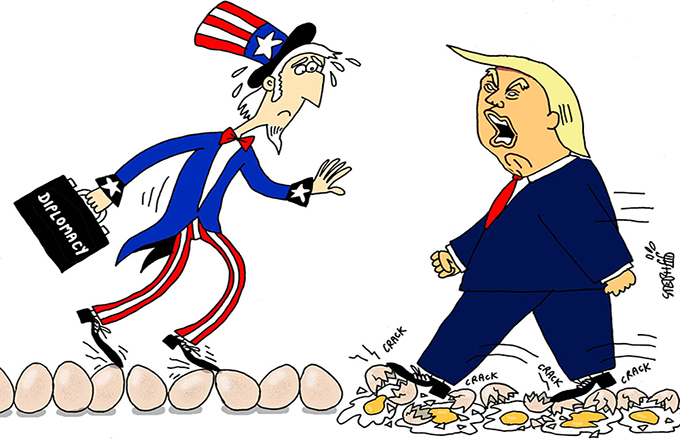
What’s more, by denying China’s due economic status, Western countries will lose their credibility when it comes to trade and political negotiations. If they can treat so lightly their commitments to China, the second largest economy and the second biggest power in the world, then their commitments to other countries will truly mean nothing. Though this may not happen soon, the influence will last a long time after it takes effect.