 |
|
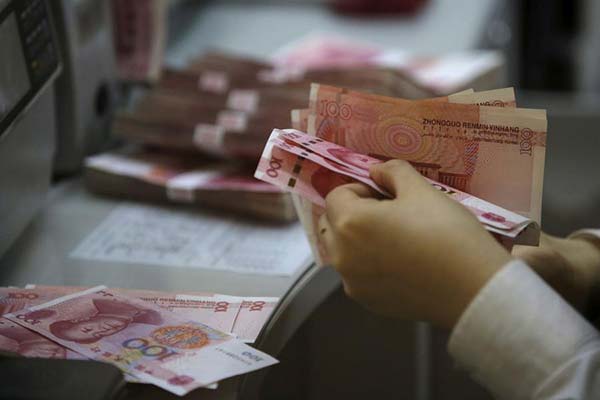
A clerk of ICBC bank counts Chinese one hundred Yuan at its branch in Beijing, China, April 13, 2016.[Photo/Agencies] |
After having been the top destination of inward foreign direct investment for decades, China's investment orientation has become increasingly outward looking. In 2014, China's outbound FDI surpassed inbound FDI for the first time. Last year, the country became the world's second-largest source of outward FDI. And in the near term, its overseas investments are expected to grow 10 percent a year, and exceed $2 trillion by 2020.
While Chinese companies are benefiting by taking advantage of emerging opportunities around the world, the rise in Chinese outbound FDI is occurring at a time of unprecedented risks, familiar and unfamiliar both. According to the China Global Investment Tracker, more than $250 billion in Chinese investments abroad have failed since 2005, mainly because of a lack of overseas investment experience, especially in risk management.
Chinese companies tend to over-rely on externally generated country risk analyses, which more often than not are produced generically and thus not entirely appropriate for specific transactions. This is perhaps the most common mistake international businesses make. They believe that because they may have information about the general political and economic profile of a country, they have a true understanding of the real nature of the risks associated with doing business there. Too often, companies get caught in an "investment trap": They commit long-term resources to a country only to find the bill of goods sold to them are completely different from what they expect.
There are plenty of stories about Chinese companies' investments going awry because of a change in a country's regulations, or a legal issue or the wrong choice of joint venture partner. After making an investment, it is often too late for a company to pull out without incurring a large loss.
Another common problem is that the lines of communication between risk management personnel and decision-makers, or among decision-makers, are either bypassed, convoluted or just plain wrong. Here are a few examples:
Risk management gets a small role to play in the transaction approval process; sales teams bypass risk management entirely, or ignore the risk management department's recommendation for fear that unacceptably high levels of risk could lead to cancellation of a transaction; or perhaps a CEO gives a presentation to a board of directors that is false, but he or she believes it to be true, because the risk manager's staff said it was.
Or maybe the board of directors of the investing company has no idea what questions they should be putting to corporate decision-makers; or a risk manager may have the right information, but make decisions based on a short-term assessment of the risks when the long-term view may be completely different.
Establishing a clear reporting network is a simple way to reduce the possibility of unforeseen events occurring-one or more individuals in the company should be assigned to focus full time on managing these risks, and/or an external company hired to create a customized risk profile for each and every investment the company plans to make. The expense involved would pay for itself many times over when a problem is detected and avoided, yet many companies are happy to invest millions of dollars abroad without doing their homework.
Achieving risk agility in the 21st century is about respecting the speed with which things can fall apart as a result of unforeseen or unexpected events. A Chinese company that embraces risk agility will be able to quickly reinvent themselves, and establish a framework and corporate culture that can warn it against the perils of internal action as well as external forces. This is the very destructive/creative cycle that drives the global economy.
Daniel Wagner is managing director of US-based Risk Cooperative and co-author of Global Risk Agility and Decision Making, and Sun Xi is a China-born independent commentary writer based in Singapore.



Copyright 1995 - . All rights reserved. The content (including but not limited to text, photo, multimedia information, etc) published in this site belongs to China Daily Information Co (CDIC). Without written authorization from CDIC, such content shall not be republished or used in any form. Note: Browsers with 1024*768 or higher resolution are suggested for this site.
License for publishing multimedia online 0108263 Registration Number: 130349