 |
|
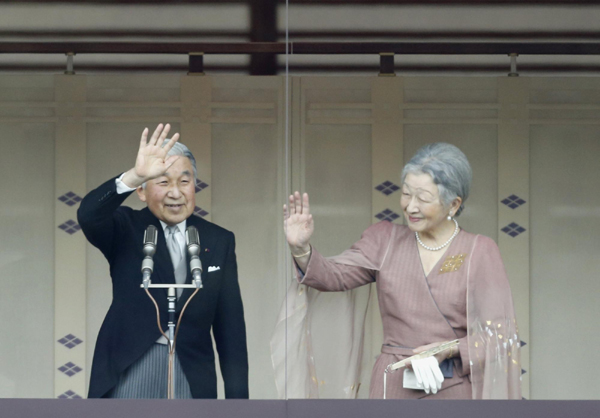
Japan's Emperor Akihito and Empress Michiko wave to well-wishers who gathered to celebrate the monarch's 79th birthday at the Imperial Palace in Tokyo Dec 23, 2012. [Photo/Agencies] |
In a video address to the Japanese people on Monday, Japanese Emperor Akihito, 82, said he was concerned that his failing health would make it difficult for him to fully carry out his duties, which was widely interpreted as expressing his desire to abdicate.
In the address, Akihito said he is worried that it may become difficult for him to carry out his duties as the symbol of the state with his whole being, as he has done until now.
The emphasis on being the "symbol" of the state is believed to be Akihito's way of saying no to Japanese Prime Minister Shinzo Abe's attempt to revise Japan's Constitution to restore the monarchy system of the past.
In a draft constitutional amendment, Abe and the Liberal Democratic Party elevate the emperor to the head of state, a move that is widely seen as a bigger change for Japan's system of governance than their proposed removal of Article 9 from Japan's postwar Constitution.
Japan's emperor is defined in the Constitution as a symbol of the "unity of the people" and has no political power. So Akihito's remarks about the need to put national peace and public happiness first and lend an attentive ear to the public has been interpreted as criticism of Abe's stubborn moves to revise Japan's national security pact and expand the overseas rights of its Self-Defense Forces in defiance of public opposition.
At the same time, the Japanese emperor also seemed dissatisfied with Abe's negative attitude toward his heir, 56-year-old Crown Prince Naruhito, becoming regent.
Akihito's hinting that he wants to abdicate is raising the issue of whether the Abe government should respect the emperor and the Constitution.
A recent opinion poll indicates that the vast majority of ordinary Japanese sympathize with the emperor's desire to retire.



In our daily life, more and more loanwords appear and change our habits in Chinese expression. Loanwords sound very similar with their original English words, and the process of learning them is full of fun to foreign students.

It has been a while since I've contributed to this Forum and I figured that since now I am officially on summer holiday and another school year is behind me I would share a post with you.
Copyright 1995 - . All rights reserved. The content (including but not limited to text, photo, multimedia information, etc) published in this site belongs to China Daily Information Co (CDIC). Without written authorization from CDIC, such content shall not be republished or used in any form. Note: Browsers with 1024*768 or higher resolution are suggested for this site.
License for publishing multimedia online 0108263 Registration Number: 130349