 |
|
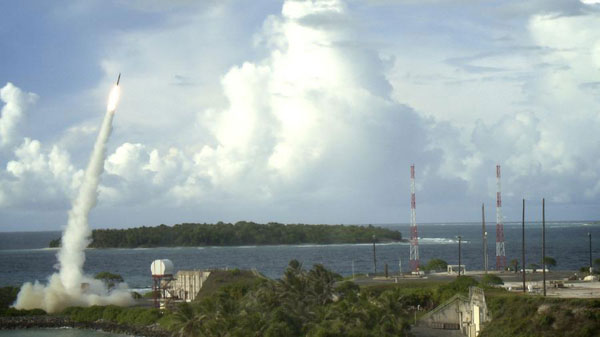
A Terminal High Altitude Area Defense (THAAD) interceptor is launched during a successful intercept test, in this undated handout photo provided by the US Department of Defense, Missile Defense Agency. [Photo/Agencies] |
While overestimating Beijing's influence on Pyongyang, Seoul has to a greater extent undervalued Beijing's commitment and endeavors to broker peace between the two Koreas.
Beijing fully endorsed the UN sanctions against the Democratic People's Republic of Korea in the belief that there is no better way to dissuade Pyongyang from continuing with its nuclear weapons program, and persuading it to return to the negotiating table.
And despite the continuous show of defiance by Pyongyang, there are credible signs the United Nations sanctions are beginning to bite.
While there is no guarantee a cornered Pyongyang will not make desperate moves, there is an oft-neglected fact that calls for attention-Pyongyang, too, prefers negotiations. Its offers of talks have repeatedly been ignored because Seoul and Washington have considered the preconditions it has set unacceptable.
However, all this potential for reaching a negotiated solution with Pyongyang may come to naught with the Republic of Korea's decision to deploy the United State's Terminal High-Altitude Area Defense system.
With Pyongyang constantly rattling its sabers, Seoul's security concerns are legitimate. Beijing understands and respects them. But Seoul does not seem to reciprocate in kind and is ignoring Beijing's own legitimate security concerns.
The strongest argument for deploying the THAAD anti-missile system is a sense of security. Yet, as many analysts have pointed out, THAAD's defensive capabilities are limited in the face of Pyongyang's threats to the ROK, which come from its artillery, short-range and lower-altitude missiles, which THAAD does not provide a defense against.
And instead of intimidating the DPRK, the decision to deploy THAAD has instead invited more angry responses from Pyongyang, significantly escalating tension and hostility. The security situation on the Peninsula will only worsen hereafter.
And that is before taking into account the THAAD's serious divisive impacts on the region.
Sizeable as they are, economic ties with China may not be as important to Seoul as its security alliance with the US. Seoul seems to believe the cost of alienating Beijing is worth it, and affordable, and there is little Beijing can do beyond voicing its own security concerns and protesting.
But the damage will not stop there.
THAAD will substantially change Northeast Asia's security landscape. Since Seoul is helping Washington consolidate its strategic deployment that can be easily targeted against both China and Russia, it is natural for them to act to counter this threat.
The ROK may find itself in the middle of a mini arms race, where it will have to follow suit if it does not want to expose itself to further, more dangerous security threats.
This will be a road of no return.


It has been a while since I've contributed to this Forum and I figured that since now I am officially on summer holiday and another school year is behind me I would share a post with you.

Copyright 1995 - . All rights reserved. The content (including but not limited to text, photo, multimedia information, etc) published in this site belongs to China Daily Information Co (CDIC). Without written authorization from CDIC, such content shall not be republished or used in any form. Note: Browsers with 1024*768 or higher resolution are suggested for this site.
License for publishing multimedia online 0108263 Registration Number: 130349