 |
|
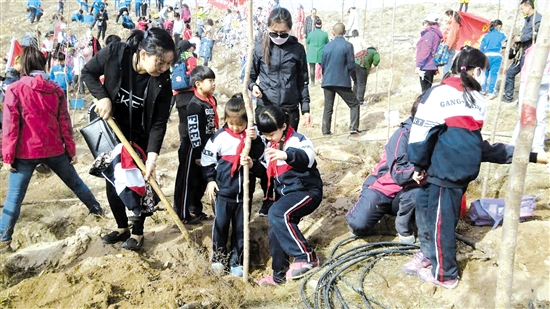
Large number of students turn out in Baotou, Inner Mongolia, along with their parents and teachers, for a greening, environmental protection, tree planting activity, on April 9. [Photo/Agencies] |
There are often protests by residents when a local government announces it is planning to build a waste incinerator or sewage or dangerous waste treatment plants. This not-in-my-backyard mentality, if unchecked, will lead to a zero-sum game between governments, enterprises and the public, Beijing Times commented on Wednesday:
People produce huge amounts of various kinds of waste in their daily lives, and garbage sorting is yet to be a habit. If everyone disagrees with the building of a waste incineration plant in their hometown, how on earth is all the garbage to be disposed of?
Compared with landfills, with the advancement of relevant technology, incinerating garbage is an efficient and comparatively hazard-free way of eliminating waste, and has the bonus that it generates energy.
To avoid a zero-sum game dilemma, the government needs to make the decision-making process behind the location of incinerators and treatment plants more transparent and ensure the views of all interests groups are taken into account. Public policies and decisions should be the result of interactions between the public and government within a legal framework.
To ensure this interaction is genuine, the environmental protection bureaus should conduct transparent environmental impact evaluations. The bureaus should also be responsible for monitoring the plants' emissions and environmental impact after they come into operation.
However, the environmental protection bureaus are part of the local governments and usually yield to the will of local government leaders in practice. The disappearance of a trustworthy environmental watchdog leads to a direct confrontation between the public and the government.
There must also be a compensation mechanism for residents and an accountability system that makes it easy for individual citizens to sue polluters and gain compensation for any pollution.



Copyright 1995 - . All rights reserved. The content (including but not limited to text, photo, multimedia information, etc) published in this site belongs to China Daily Information Co (CDIC). Without written authorization from CDIC, such content shall not be republished or used in any form. Note: Browsers with 1024*768 or higher resolution are suggested for this site.
License for publishing multimedia online 0108263 Registration Number: 130349