 |
|
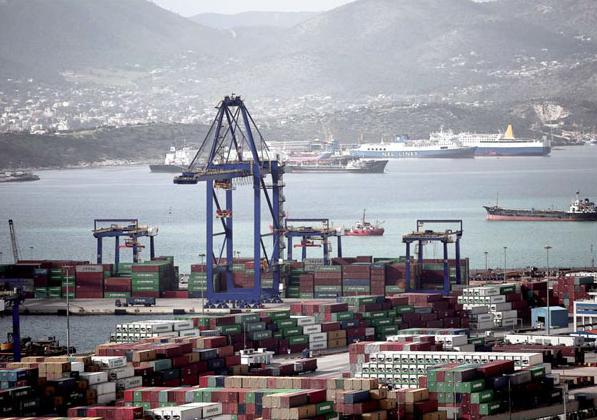
Greece's largest port, Piraeus, near Athens. [Photo/Agencies] |
The Silk Road Economic Belt and 21st Century Maritime Silk Road, proposed by President Xi Jinping, are China's strategic initiative. It is true that the Belt and Road Initiative can deepen China's relations with neighboring countries and promote peace and stability through common development. But what does the initiative mean for Eurasian countries?
The Belt and Road Initiative has four characteristics: peace, openness, fairness and tolerance. It means not being against any country or group, non-interference in another country's internal affairs, attracting all interested countries and international organizations, and respecting their wishes. The initiative, contrary to what some people think, is not an international project dominated by China. Instead, it is a long-term strategy of cooperation with all regional and international mechanisms.
The Belt and Road Initiative is committed to promoting the development of communication in Eurasia. After the collapse of the Soviet Union, the Eurasian communication and logistics systems slowly disintegrated. And it became difficult to establish a new, modern transportation system, at least in the short term, for lack of funds.
According to the Soviet era communication structure, the internal transport routes of one republic often had to pass through another republic's territory. The differences among Eurasian countries over territories, boundaries, ownership of resources and other issues made traffic problems in the region very complicated. For a long time, the region's aging transport infrastructure has remained fragmented, thwarting the development of the logistics industry and hindering economic development.
It is here that the Silk Road Economic Belt can help, because it is aimed at boosting infrastructure construction, promoting interconnection, improving transport facilities and strengthening the logistics network, in order to expand foreign trade. The Belt and Road Initiative can also provide the funds and technology Eurasian countries need to boost their economic growth.
The world economy is still recovering from the global financial crisis, and economic growth has slowed down in many countries with some being in recession. If the Eurasian countries can deepen economic cooperation and promote the free flow of production factors, they can improve their productivity and competitiveness. And by participating in the Silk Road Economic Belt, they can obtain funds from financial institutions such as the Silk Road Fund and the Asian Infrastructure Investment Bank, as well as get high-tech aid from China, which will help upgrade their production process, diversify their export market and facilitate trade.
The Belt and Road Initiative will also help Eurasian countries expedite the implementation of bilateral and multilateral cooperation projects. History shows that bilateral and multilateral cooperation projects facilitate the resolution of even serious problems between countries, improve mutual relations and promote regional stability.
For example, after work on the China-Central Asia natural gas pipeline project started, the relationship between the Central Asian countries has improved and strengthened. The leaders of some of the countries started communicating with each other again, discussing such vital issues as how to best implement the project within their territory, so as to derive the maximum economic benefit from it. This breakthrough produced a series of benign reaction, pushing the region's countries to deepen cooperation in some other areas, such as politics, security and economic integration of Eurasian countries.
The Belt and Road Initiative is one such multilateral project.
The author is director of the Research Division of Ukraine, Belarus, Moldova and the Baltic States of the Institute for Russian, East European and Central Asian studies, Chinese Academy of Social Sciences.



I’ve lived in China for quite a considerable time including my graduate school years, travelled and worked in a few cities and still choose my destination taking into consideration the density of smog or PM2.5 particulate matter in the region.
Copyright 1995 - . All rights reserved. The content (including but not limited to text, photo, multimedia information, etc) published in this site belongs to China Daily Information Co (CDIC). Without written authorization from CDIC, such content shall not be republished or used in any form. Note: Browsers with 1024*768 or higher resolution are suggested for this site.
License for publishing multimedia online 0108263 Registration Number: 130349