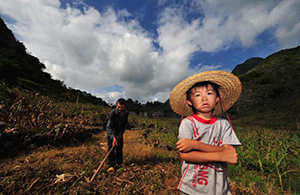
High-temperature subsidies are given to workers exposed to outdoor temperatures above 35 Celsius, as well as to those working indoors in temperatures above 33 C.
According to the State Administration of Work Safety, labor authorities are responsible for fixing local subsidy standards. Twenty-eight provinces, municipalities and autonomous regions have done so this summer.
In East China's Shandong province, employees working indoors in high temperatures will get a monthly subsidy of 200 yuan ($30.47) each, an increase of 80 yuan from last year, and those working in "not-so-high temperatures" will get 140 yuan, 60 yuan more than last year. This is the first increase in the province since 2006.
The high-temperature subsidy in Shaanxi province, Northwest China, has been raised from 10 yuan to 25 yuan per person per day.
Employees in northern regions and provinces such as Beijing and Shanxi are entitled to the subsidy from June to September while those in Hainan province, at southern end of China, get the subsidy from April to October.
However, despite the central government's instructions to provincial and regional authorities to fully implement the subsidy program, many employees say they don't get such subsidies. Many outdoor workers such as couriers and sanitation workers say that though they have been getting the subsidy during the past few summers, they are not clear about the specific standard.
Besides, many provinces and regions have not upgraded their standards for years. Guangdong province in South China still uses the standard fixed in 2007, providing 150 yuan per month for outdoor workers. And Henan province follows the standard decided in 2008-that is, 10 yuan per person per working day.
Currently, the distribution of high-temperature subsidies depends mainly on supervision of labor inspectors, trade unions and management departments. The problem is, the supervision is relatively weak and there are no provisions for punitive action against non-compliance.



I’ve lived in China for quite a considerable time including my graduate school years, travelled and worked in a few cities and still choose my destination taking into consideration the density of smog or PM2.5 particulate matter in the region.
Copyright 1995 - . All rights reserved. The content (including but not limited to text, photo, multimedia information, etc) published in this site belongs to China Daily Information Co (CDIC). Without written authorization from CDIC, such content shall not be republished or used in any form. Note: Browsers with 1024*768 or higher resolution are suggested for this site.
License for publishing multimedia online 0108263 Registration Number: 130349