 |
|
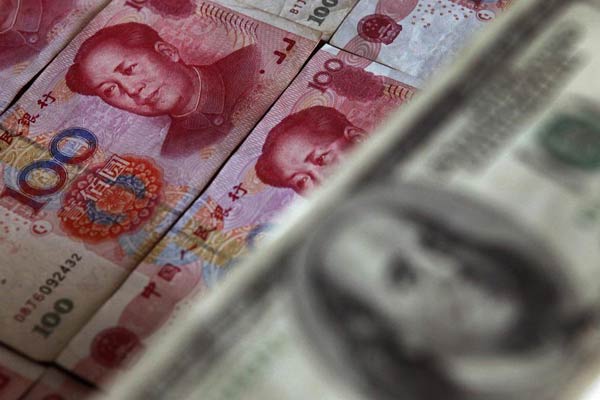
A photo illustration shows a $100 banknote placed above Chinese 100 yuan banknotes in Beijing in May 10, 2013. [Photo/Agencies] |
Whatever happened to deleveraging? In the years since the 2008 global financial crisis, austerity and balance-sheet repair have been the watchwords of the global economy. And yet today, more than ever, debt is fueling concern about growth prospects worldwide.
The McKinsey Global Institute, in a study of post-crisis debt trends, notes that gross debt has increased about $60 trillion-or 75 percent of global GDP-since 2008. China's debt, for example, has increased fourfold since 2007, and its debt-to-GDP ratio is some 282 percent-h(huán)igher than in many other major economies, including the United States.
A global economy that is levering up, while unable to generate enough aggregate demand to achieve potential growth, is on a risky path. But to assess how risky, several factors must be considered.
First, one must consider the composition of the debt across sectors (household, government, non-financial corporate, and the financial sector). After all, distress in these sectors has very different effects on the broader economy.
As it turns out, economies with similar and relatively high levels of gross debt relative to GDP exhibit sharp differences when it comes to the composition of the debt. Excessive household debt is particularly risky, because a shock in the price of assets (especially real estate) translates quickly into reduced consumption, as it weakens growth, employment, and investment. Recovery from such a shock is a long process.
The second factor to consider is nominal growth-that is, real growth plus inflation. Today, real growth is subdued and may even be slowing, while inflation is below target inmost places, with some economies even facing the risk of deflation. Because debt is a liability for borrowers and an asset for creditors, these trends have divergent effects, increasing value for the asset holder, while increasing the liability of the debtor. The problem is that, in a low growth environment, the probability of some form of default rises considerably. In that case, nobody wins.
The third key factor for assessing the risk of growing debt is monetary policy and interest rates. Though no one knows exactly what a "normal" interest-rate environment might look like in the post-crisis world, it is reasonable to assume that it will not look like it does today, when many economies are keeping rates near zero and some have even moved into negative territory.
Sovereigns with high and/or rising debt levels may find them sustainable now, given aggressively accommodative monetary policy. Unfortunately, though such accommodation cannot be sustained forever, today's conditions are often viewed as semi-permanent, creating the illusion of stability and reducing the incentive to undertake difficult reforms that promote future growth.
The final, and arguably most important, factor shaping debt risk relates to investment. Increasing debt to sustain current consumption, whether in the household or government sector, is rightly viewed as an unsustainable element of a growth pattern. Here, China's case is instructive.



I’ve lived in China for quite a considerable time including my graduate school years, travelled and worked in a few cities and still choose my destination taking into consideration the density of smog or PM2.5 particulate matter in the region.
Copyright 1995 - . All rights reserved. The content (including but not limited to text, photo, multimedia information, etc) published in this site belongs to China Daily Information Co (CDIC). Without written authorization from CDIC, such content shall not be republished or used in any form. Note: Browsers with 1024*768 or higher resolution are suggested for this site.
License for publishing multimedia online 0108263 Registration Number: 130349