 |
|
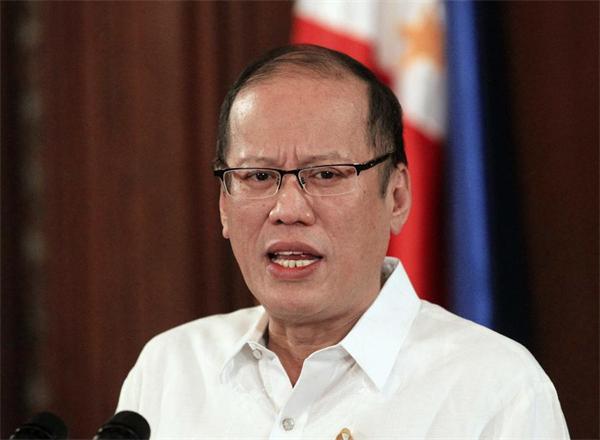
Philippines' President Benigno Aquino deliver a statement during a national address at the presidential palace in Manila February 6, 2015. [Photo/Agencies] |
With the Philippines set to elect a new president on Monday, the international community is waiting to see whether the new government takes measures to improve Beijing-Manila ties, which have been plagued by rising tensions over the maritime dispute between the two sides in the South China Sea.
During the election campaign, all presidential candidates appeared to take a fairly hawkish stance on the South China Sea issue. Yet most of them hinted that, if elected, they would revise the China policy followed by President Benigno Aquino III, who outrageously likened China to Nazi Germany in a speech to the Japanese parliament last year. Some of the candidates even said that they would resume the high-level exchanges with China and address the bilateral disputes through peaceful negotiations.
Such a contradictory mentality, in effect, is shared by many Philippine politicians. For them, China is a neighbor which is the second-largest trade partner, largest source of imports, and the second-largest export market for their country. That clashing with China will significantly reduce the Philippines' dividends from the ongoing regional economic integration explains why Aquino has shown great interest in the Beijing-led Belt and Road Initiative and decided to join the Asian Infrastructure Investment Bank. By playing the nationalism card in the South China Sea issue, Aquino did manage to distract public attention, and achieve political stability and economic development at home, as foreign investment in the Philippines has increased in the past six years. The tactic also added weight to his government's legitimacy and the cohesion of his party's rank and file, but failed to narrow the income gap between the few haves and the huge population of have-nots.
Besides, nationalism has become part of the psyche of many have-nots, especially youths, largely "thanks to" Aquino's "accommodation" policy. That made it difficult for any candidate to challenge his "strongman" policy toward China. But since even they had no specific policies to offer, they kept appealing to public sentiments.
As a close ally of the United States, the Philippines turned to the east to contain China and endorse Washington's "rebalancing to Asia" strategy under the stewardship of Aquino. And Washington's military and economic aid, in turn, emboldened the hardliners in the Philippines to meddle with China's lawful construction on its islands in the South China Sea.
The hardliners apparently failed to see the grave dangers of triggering a possible confrontation between major powers in the region, including China, the US and Japan-the last two being the Philippines' largest and the third-largest trade partner last year. The truth is, Manila is unlikely to walk away with impunity if the situation worsens.
That said, there is little the new Philippine government can do to readjust the China policy. It may end up hedging its bets by simultaneously seeking Washington's protection and enhancing the economic and political closeness with Beijing.
As for the Manila-proposed arbitration case challenging China's territorial sovereignty in the South China Sea issue, whose outcome is expected in a few weeks, China has repeatedly said that it will neither take part in nor accept the process. Instead, it has made clear its sincerity in negotiating with the Association of Southeast Asian Nations member states on the Conduct of Parties in the South China Sea, under the spirit of the "dual-track" strategy. It is time Manila properly responded to Beijing's honest move to improve bilateral relations.
The author is a researcher at the National Institute of International Strategy at the Chinese Academy of Social Sciences.



I’ve lived in China for quite a considerable time including my graduate school years, travelled and worked in a few cities and still choose my destination taking into consideration the density of smog or PM2.5 particulate matter in the region.
Copyright 1995 - . All rights reserved. The content (including but not limited to text, photo, multimedia information, etc) published in this site belongs to China Daily Information Co (CDIC). Without written authorization from CDIC, such content shall not be republished or used in any form. Note: Browsers with 1024*768 or higher resolution are suggested for this site.
License for publishing multimedia online 0108263 Registration Number: 130349