 |
| MA XUEJING/CHINA DAILY |
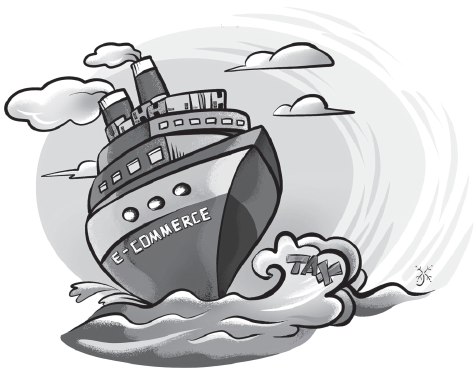
China's new taxation policy targeted at imported goods sold on e-commerce platforms has drawn a lot of complaints from dealers as well as consumers, but it will not prevent the industry from expanding at a fast pace.
Last month, the government announced higher taxes would soon be imposed on most products imported by domestic e-commerce companies. On April 7, the Ministry of Finance unveiled a list of more than 1,100 imported items targeted by the new tax policy. Not surprisingly, many believe the move will deal a heavy blow to domestic e-commerce players since consumers will be forced to pay more for shopping online.
The new tax policy will, no doubt, make imported products more expensive on e-commerce platforms, including baby formula, home appliances and clothes and shoes. But given China's fast expanding middle class and high-income groups, the ripple effects of the policy will soon fade as online shopping, especially those for imported products, continues to increase in China.
The new tax policy has its share of defects, though. For example, policymakers said the policy will create a level playing field for online and offline retailers of imported goods-as online sellers enjoyed preferential tax rates-but it has been implemented too hastily for e-commerce companies to prepare for the necessary procedural changes.
The authorities announced a month ago that a new tax policy would be adopted, but the Ministry of Finance released the "positive list"-list of goods allowed to be imported and subject to the new tax policy-on April 7, just one day before it was formally implemented, leaving almost no time for e-commerce platforms to update their online product information and adjust their stocks. Therefore, the move has aroused complaints from many e-commerce players.
Procedural defects aside, the move will reshape the industrial landscape since the main players, which enjoy financial advantage, will consolidate their positions because they have capability of absorbing the rising costs. Small players, which are more cost-sensitive, may find it difficult to operate.
The trading of imported goods, however, will not be seriously affected given the strong demand from the rising numbers of well-off consumers in the country. According to the Boston Consulting Group, the number of households with a monthly income of 12,000 yuan ($1,855) to 22,000 yuan in China may increase by 100 million in the next decade.
And a report issued by investment bank Credit Suisse in 2014 said the average net assets of people on the Chinese mainland have increased rapidly from $5,670 to about $21,300 and the number of the middle class people with an asset of $10,000-$100,000 has doubled since 2000.
No matter which criterion one uses, it is indisputable that Chinese people's individual wealth has been increasing fast in recent years, fundamentally changing their consumption behavior and the business landscape as well.
Chinese people are willing to pay more to get better quality products and services thanks to their rising incomes. And recent food scandals have made them more resolute in their decision to purchase imported products, such as baby formula, on e-commerce platforms if they can afford to pay for them.
The Ministry of Commerce estimates the value of China's cross-border e-commerce trading will reach 6.5 trillion yuan this year, increasing to 8 trillion yuan in 2017. And although the extra 10 percent tax experts say online buyers of imported goods will have to pay may not be a small amount, it is not enough to derail the high-rate growth of the e-commerce industry.
The author is a senior writer with China Daily. xinzhiming@chinadaily.com.cn



I’ve lived in China for quite a considerable time including my graduate school years, travelled and worked in a few cities and still choose my destination taking into consideration the density of smog or PM2.5 particulate matter in the region.
Copyright 1995 - . All rights reserved. The content (including but not limited to text, photo, multimedia information, etc) published in this site belongs to China Daily Information Co (CDIC). Without written authorization from CDIC, such content shall not be republished or used in any form. Note: Browsers with 1024*768 or higher resolution are suggested for this site.
License for publishing multimedia online 0108263 Registration Number: 130349