 |
|
MA XUEJING/CHINA DAILY |
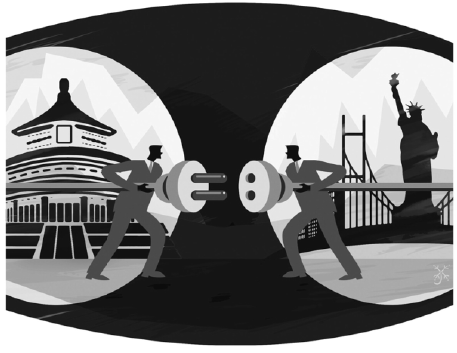
President Xi Jinping is again meeting with US President Barack Obama and pundits are eager to offer prescriptions and proscriptions to improve China-US relations. Although good-willed, much of the advice is repetitive, even soporiferous. Maybe that's a good thing-because predictability, in sensitive diplomacy as in financial markets, is a good thing. But maybe there's better advice.
The Xi-Obama meeting will take place on the sidelines of the fourth Nuclear Security Summit in Washington on Thursday. While the aim of the summit is critical-preventing nuclear terrorism-attention is focused on the Obama-Xi meeting.
So how can the two sides show respect to each other without compromising their core interests? And how can they accommodate each other without appeasing? Start with what some on each side, suspicious of the other, really think.
In China, some say the US seeks to "contain China" and thwart its historic rise. They see the US encircling China by alliances, explicit or implicit, with Japan, the Republic of Korea, the Philippines, Vietnam and India; coercing China to open its markets to control its industries and exploit its consumers; restricting Chinese companies' operations and acquisitions and mergers in the US; hacking China's computers and sending spy planes to patrol China's shores; fomenting "extremism, separatism and terrorism" in the Tibet and Xinjiang Uygur autonomous regions; and injecting Western values to overwhelm Chinese values, eroding China's independence and undermining its sovereignty.
In the US, some say China is a looming political and military challenger, an economic superpower that plays by its own rules and whose opaque intentions are intimidating its neighbors; acts solely in its own interests, even to the detriment of the international order; is a mercantile predator that uses government power to promote commercial interests, boosting exports and stealing jobs, and allows (indeed promotes) nefarious hacking and industrial theft; and the Chinese government limits human rights to maintain control, and its mounting military power, especially its modernizing blue-water navy, betrays expansionist ambitions.
How to deal with such sweeping, invidious suspicions? The normal way is for leaders to emphasize commonalities and manage differences, which seems to work well at first, but then often seems to backslide.
There is no magic solution. While progress is best made incrementally, not precipitously, how do we characterize the differences between China and the US? A descriptive term could be "asymmetric". Because the core interests of China and the US are not the same, a zero-sum game is not inevitable. We hear about "asymmetric warfare". How about "asymmetric peacefare"?
What are the kinds of China-US asymmetric disputes and how can they be ameliorated?
There is an obvious political asymmetry. Obama is in his last year in office and seeks what's best for the US. Xi has many years in office and seeks what's best for China, transforming the country through economic transition, reform and the rule of law. More important, though, is the China-US asymmetry in core interests.
China would like the US to understand and respect its three core interests: China's political system, which its leaders believe is in the best interests of the overwhelming majority of the Chinese people; China's development as its highest national priority and the need for social stability at a time of economic complexities when deep and sensitive reforms are essential; and China's sovereignty over specific land and maritime territories, which reflect both historic realities and national pride.
The US would like China to understand and respect its three core interests: the sanctity of the international order and the standards of international law; accepted norms of behavior in foreign affairs and international commercial activities; and respect for human rights.
I believe these asymmetric core interests should not conflict. My hope is for harmony, which is why my call is for "asymmetric harmony" to help manage US-China relations.
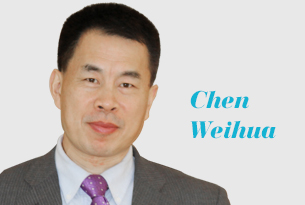
The author is a public intellectual, political/economics commentator, and international corporate strategist.



I’ve lived in China for quite a considerable time including my graduate school years, travelled and worked in a few cities and still choose my destination taking into consideration the density of smog or PM2.5 particulate matter in the region.
Copyright 1995 - . All rights reserved. The content (including but not limited to text, photo, multimedia information, etc) published in this site belongs to China Daily Information Co (CDIC). Without written authorization from CDIC, such content shall not be republished or used in any form. Note: Browsers with 1024*768 or higher resolution are suggested for this site.
License for publishing multimedia online 0108263 Registration Number: 130349