 |
|
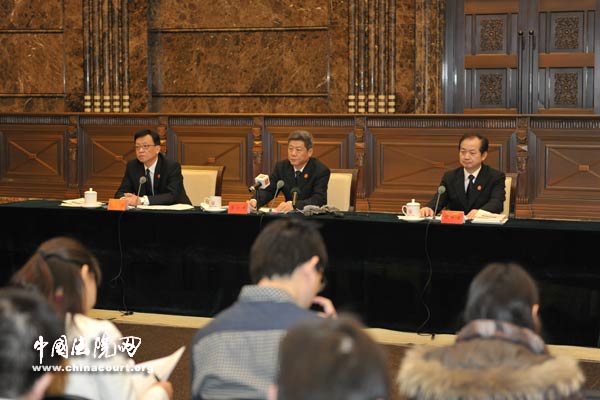
Li Shaoping (C), vice-president of the Supreme People's Court, introduces the white paper on Chinese courts’ judicial reform at a press conference in Beijing, Feb 29, 2016. [Photo/chinacourt.org] |
Strengthening the management of overseas non-governmental organizations' activities according to China's rules and regulations, and expediting the process of enacting laws are part of the country's efforts to promote the rule of law. They will not only help maintain State security and social stability, but also protect the legal interests of these organizations.
Overseas NGOs have been a useful channel for China's communication with the rest of world. More than 7,000 overseas NGOs are working in China in the fields of economy, education, science and technology, public health, sports, charity and environmental protection.
On the one hand, most NGOs are engaged in activities that are good for Chinese society and charity. On the other hand, some have illegally taken part in or funded profit-making, political or religious activities, while some others did so even without being registered or getting the approval of the administration as required by the two ordinances passed in 1989 and 2004. Worse, some NGOs' activities harm China's national and public interests, and even threaten State security and national unity.
The legislation on the management of overseas NGOs is transparent, open to supervision and public suggestions, as well as prudent. China's top legislature reviewed the draft of the law twice last year, published it online to solicit public opinions, organized seminars with overseas NGOs and responded to the questions posed by some countries.
The law can improve China's social governance, solve the accumulated problems in overseas NGOs' administration, and maximize their positive roles in the Chinese society. Besides, government departments will establish a coordinated work mechanism to improve the management of overseas NGOs.
Rather than restricting overseas NGOs' activities, the law will provide a legal foundation for them, and protect their rights and interests in organizing lawful activities. Since no overseas NGO enjoys extraterritoriality in China, all NGOs have to abide by Chinese laws and rules.
The fast development of Chinese society means overseas NGOs will have more room to perform their roles. And the law will help them do so better.
Liu Jie is a researcher on public governance at the Shanghai Academy of Social Sciences.



I’ve lived in China for quite a considerable time including my graduate school years, travelled and worked in a few cities and still choose my destination taking into consideration the density of smog or PM2.5 particulate matter in the region.
Copyright 1995 - . All rights reserved. The content (including but not limited to text, photo, multimedia information, etc) published in this site belongs to China Daily Information Co (CDIC). Without written authorization from CDIC, such content shall not be republished or used in any form. Note: Browsers with 1024*768 or higher resolution are suggested for this site.
License for publishing multimedia online 0108263 Registration Number: 130349