 |
|
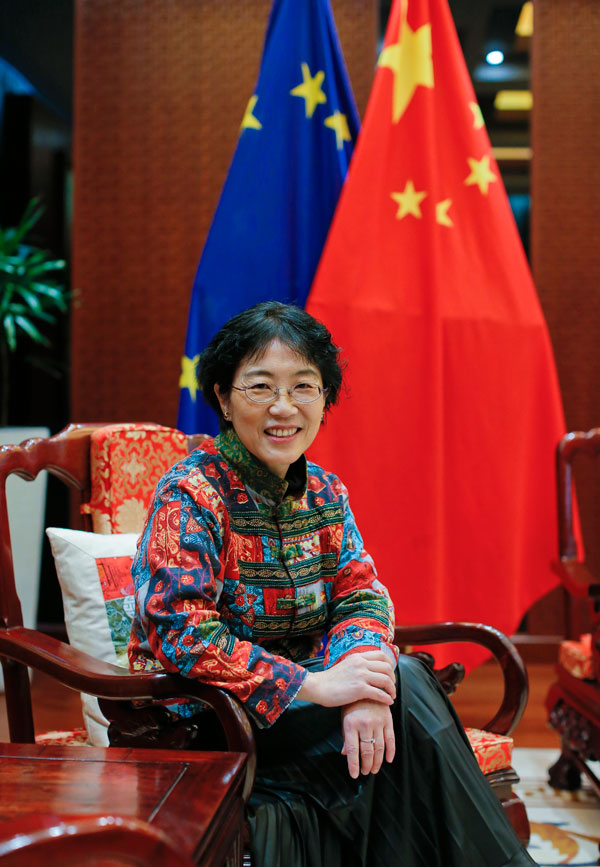
Ambassador Yang Yanyi, Head of the Chinese Mission to the EU. |
On Friday, the European Commission opened new anti-dumping investigations on steel products originating from China, and the European steel industry organized a demonstration against so-called Chinese dumping in the EU market and the granting of Market Economy Status to China.
Nobody should be under any illusion: overcapacity, including excess capacity in the global steel sector is one of the many challenges we are all faced with. Not only the European steel industry has been hard hit, iron and steel industries in China and many other emerging economies are suffering badly from excessive production and flagging demand.
According to some estimates, cutting back the overcapacity in China by 30 percent in those industries with most excess capacity-iron and steel, coal, cement, shipbuilding, aluminum and flat glass-is expected to affect the employment of 3 million workers.
Not to mention that China is also confronted with many other daunting tasks: lifting 70 million people out of poverty, advancing industrialization to transform China into a post-industrial society, rebalancing the economy from investment and net exports to consumption and innovation.
The situation is serious and requires a response.
But what kind of response? Grumble, curse, cut the ground from under other's feet? Retreat into protectionism and be at each other's throats?
If history serves as a guide, these are unwelcome if not irresponsible responses. They may help to give vent to the anger and frustration of some and obtain short-term gains, but they fail to serve the common long-term interests of all.
Obviously the response to the challenges is up to each and every country. I only wish to share what we believe to be the best possible approach and option, and what China has been doing and will continue to do with regard to the issue.
First, digest the problem and not dump it onto other's doorsteps.
The development of the steel industry in China has been mainly to meet its domestic demand, rather than to export products to other countries.
To effectively deal with the overcapacity problems, China has taken tough measures to control new capacity. Painful as it is, China has cut its steel industry capacity by more than 90 million tons over the past few years and its investment in iron and steel assets by 13 percent last year. The growth of Chinese steel production has basically come to a halt.
To continue to address overcapacity in a serious and resolute manner, China has made elimination of overcapacity the top priority for this year and will cut the steel industry capacity by another 100 to 150 million tons.



I’ve lived in China for quite a considerable time including my graduate school years, travelled and worked in a few cities and still choose my destination taking into consideration the density of smog or PM2.5 particulate matter in the region.
Copyright 1995 - . All rights reserved. The content (including but not limited to text, photo, multimedia information, etc) published in this site belongs to China Daily Information Co (CDIC). Without written authorization from CDIC, such content shall not be republished or used in any form. Note: Browsers with 1024*768 or higher resolution are suggested for this site.
License for publishing multimedia online 0108263 Registration Number: 130349