 |
|
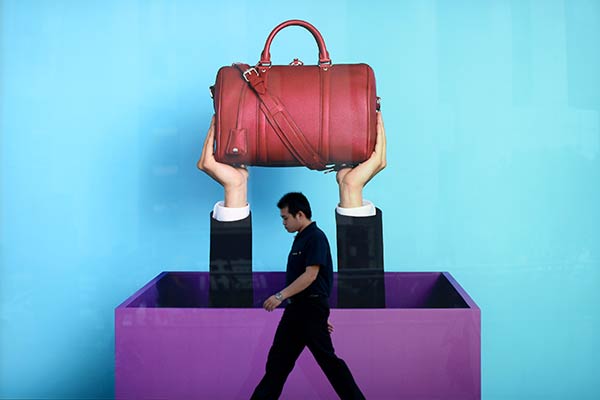
A man passes Louis Vuitton's advertisement in Wuhan, Hubei province. [Photo / China Daily] |
On taking office, top leader Xi Jinping vowed to crack down on "tigers and flies", corrupt senior and lower-level officials. Over the past three years the anti-corruption campaign has been executed under the direction of the Central Commission for Discipline Inspection, the ruling Party's top anti-graft body, and its chief Wang Qishan.
But in early December, global financial giant BNP Paribas said the anti-corruption campaign has knocked 1-1.5 percent off the country's GDP annually over the past two years and continues to hit the economy. According to BNP Paribas, the anti-corruption drive has harmed investment and gift-giving, local governments' investment projects and foreign multinationals.
So, is the campaign against corruption really bad for economic growth?
In China, investment as a source of growth is declining while the share of consumption is increasing in relative terms. And that has little to do with the anti-corruption drive. Rather, it is the result of rebalancing away from investment and net exports toward consumption and innovation.
The idea that the anti-corruption campaign is curbing local governments' investment impetus is flawed. Instead, local governments are constrained by debt, which soared after the global financial crisis when excessive liquidity led to speculation in property markets. Local debt has amounted to more than $3 trillion. And yet, critics seem to blame the anti-corruption campaign for local governments' risky and opaque liabilities at a time when the CCDI is targeting corrupt local government officials.
Also, gift-giving has never fueled China's aggregate economy. In the past, it benefited those who received the gifts and those that gave the gifts in return for favors. The consequent "sweetheart" deals and exclusive relationships reduced government revenues and people's livelihoods.
Finally, those foreign multinationals that respect good governance continue to invest and thrive in China, whereas those that have used corruption to further their strategic objectives-including pharmaceutical giant GlaxoSmithKline-should be penalized. Both the private and public sector need integrity and good governance.



I’ve lived in China for quite a considerable time including my graduate school years, travelled and worked in a few cities and still choose my destination taking into consideration the density of smog or PM2.5 particulate matter in the region.
Copyright 1995 - . All rights reserved. The content (including but not limited to text, photo, multimedia information, etc) published in this site belongs to China Daily Information Co (CDIC). Without written authorization from CDIC, such content shall not be republished or used in any form. Note: Browsers with 1024*768 or higher resolution are suggested for this site.
License for publishing multimedia online 0108263 Registration Number: 130349