China's high and rising urban saving rate in a climate of vigorous per capita income growth reflects a persistent preference for precautionary savings over discretionary consumption. Unfortunately, this is a rational response to the uncertain future faced by the majority of Chinese families, underscored by the lack of a reliable social safety net. Moreover, anxiety over inadequate provisions for retirement and healthcare is set to intensify as a rapidly aging population now enters the most vulnerable phase of its life cycle.
The good news is that the 13th Five-Year Plan (2016-20), which is to be enacted in March 2016, is likely to address these concerns explicitly. Early indications from the Fifth Plenum of the 18th Central Committee of the Communist Party of China, held in late October, suggest that the new plan will focus on the missing piece of consumer-led rebalancing: a strong social safety net.
A proposed consolidation of rural and urban plans for pensions and critical healthcare is particularly important in this regard, as is the authorities' commitment to allowing workers to transfer their hukou (household registration) - and the associated social welfare benefits - wherever they move. For China's 270 million migrant workers, benefit portability could be decisive in shifting the balance from fear and precautionary savings to security and discretionary spending. Equally significant was the Fifth Plenum's emphasis on using State capital to fund a more robust safety net through an increase in taxes on State-owned enterprises that was proposed a couple of years ago.
But the biggest breakthrough in reshaping societal norms was in the family planning policy - a milestone revision to the policy is likely to allow all couples to have two children from Jan 1, 2016. Aimed at addressing China's serious aging problem, the eventual consequences of this long-overdue shift cannot be minimized. As the family unit, central to China's Confucian heritage, changes so will the country's social and economic character.
Over the past 35 years, China's powerful growth model has yielded extraordinary progress in terms of economic growth and development. But speedy implementation of the shift from production to consumption will be vital if the country is to remain on course and avoid the middle-income trap. That will require bridging the disconnect between the structural shift to services and the behavioral norms that will ultimately shape the spending habits of its people.
And that means overcoming the understandable caution of Chinese households in the face of an uncertain future. Converting fear into confidence is a daunting task for any society. China is no exception. The focus on resolving China's macroeconomic disconnect, reflected at the Fifth Plenum, is thus very encouraging.
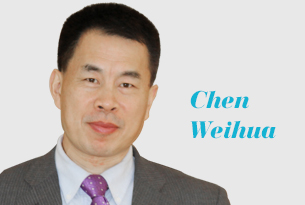
The author, a faculty member at Yale University and former chairman of Morgan Stanley Asia, is the author of Unbalanced: The Codependency of America and China.
Project Syndicate



I’ve lived in China for quite a considerable time including my graduate school years, travelled and worked in a few cities and still choose my destination taking into consideration the density of smog or PM2.5 particulate matter in the region.
Copyright 1995 - . All rights reserved. The content (including but not limited to text, photo, multimedia information, etc) published in this site belongs to China Daily Information Co (CDIC). Without written authorization from CDIC, such content shall not be republished or used in any form. Note: Browsers with 1024*768 or higher resolution are suggested for this site.
License for publishing multimedia online 0108263 Registration Number: 130349