 |
|
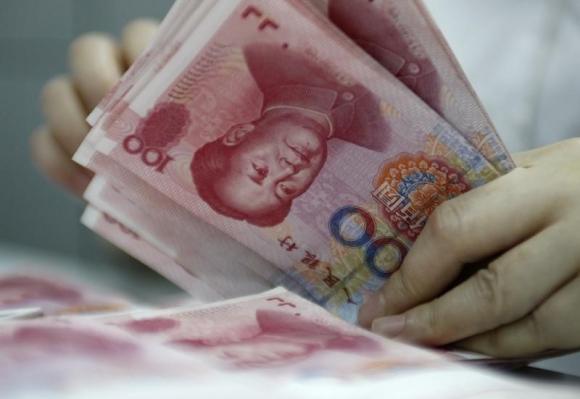
An employee counts yuan banknotes at a bank in Huaibei, Anhui province June 22, 2010.[Photo/Agencies] |
With China slashing interest rates for the sixth time in a year last Friday, it seems that major economies around the globe are converging on monetary easing.
However, cheap money, as an expedient measure to fight a financial crisis, has largely proved inadequate to address long-term challenges. An ultra-loose monetary policy did not save the Japanese economy from its lost decades nor did counterintuitive negative interest rates galvanize the eurozone into solid growth.
Worse, if global policymakers cannot promptly reach an agreement on how to exit from cheap money in an orderly way, the uncertainties caused by the on-and-off debate about when the United States will hike its near-zero interest rate may just be the tip of the iceberg.
The latest interest rate cut shows China's central bank is heading in the direction of more easing. But it does not mean that the Chinese authorities are embracing the unprecedented policy of zero interest rates as many Western countries have.
Chinese monetary policymakers are only rising to the occasion as the country's economic growth dipped to a six year low of 6.9 percent in the third quarter. The People's Bank of China cut its benchmark one-year lending and deposit rates by 25 basis points each, to 4.35 percent and 1.5 percent respectively, effective from Saturday. By injecting some liquidity to help arrest the economic slowdown, China's central bank is doing its necessary and conventional job.
Actually, the more noteworthy move by the PBOC last Friday was its decision to lift controls on deposit rates, a "significant milestone" in the country's financial reform. Since China gave domestic banks freedom to set their loan rates in July 2013, the latest move has made China's interest rates basically liberalized.
Such a bold step forward in financial reform bears full testimony to Chinese authorities' resolution to press ahead with comprehensive economic reforms even as the world's second-largest economy is struggling with structural inefficiencies and expanding at its slowest rate since the global financial crisis.
And as China prepares a new five-year plan to address short-term growth pains and achieve long-term goals of sustainable development, it is a sure bet that the country will not buy cheap money as a panacea.
Those counting on the Chinese economy to be a driving force for global growth should thus not worry that Chinese policymakers may mistake pain-killing cheap money as a replacement for necessary and painful structural reforms.
Nevertheless, the case is less reassuring in zero-interest-rate economies, in particular the US.
After deciding that the uncertainty was too high for a rate hike in September, the US Federal Reserve is now widely expected to again delay raising interest rates at this week's meeting.
Some people have tried to justify such a reluctance to abandon its addiction to cheap money as a well-intentioned act that will buy some more time for emerging market economies to prepare for a long-expected and challenging tightening of US monetary policy.
But the increasing turbulence in capital and currency markets as a result of the Fed's slower-than-expected shift toward increasing interest rates has already taken its toll on the fragile global recovery, which is set for the slowest annual growth since 2009.
It has become quite obvious now that the extreme easy-money stance of the US has both run its course as a policy tool to deal with a financial crisis and reached its limit in boosting real economic growth. The longer it lasts, the more asset bubbles it will fuel and more market uncertainties it will add.
If global growth is to accelerate from 3.1 percent for this year to 3.6 percent in 2016, as the International Monetary Fund predicts, the international community must work together to coordinate monetary and growth policies for the uncomfortable but eventual departure from too much cheap money.
The author is a senior writer with China Daily. zhuqiwen@chinadaily.com.cn



I’ve lived in China for quite a considerable time including my graduate school years, travelled and worked in a few cities and still choose my destination taking into consideration the density of smog or PM2.5 particulate matter in the region.
Copyright 1995 - . All rights reserved. The content (including but not limited to text, photo, multimedia information, etc) published in this site belongs to China Daily Information Co (CDIC). Without written authorization from CDIC, such content shall not be republished or used in any form. Note: Browsers with 1024*768 or higher resolution are suggested for this site.
License for publishing multimedia online 0108263 Registration Number: 130349