 |
|
The Pazhou area in Haizhu is rising as a modern hub for traditional commerce and e-commerce as it is home to the Pazhou Complex of the Canton Fair and the planned Pazhou Internet Innovation Zone. [Photos provided to China Daily] |
China's enthusiasm to make mass entrepreneurship and innovation a new engine for economic growth is hardly surprising given the world's second-largest economy is undergoing painful transformation.
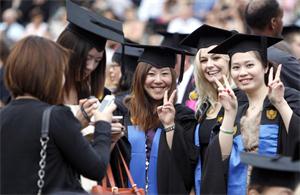
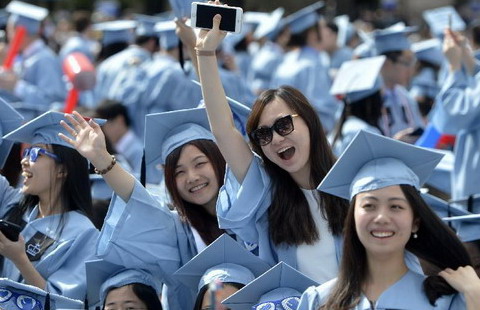
To rally as much support as possible for the first "National Week of Mass Entrepreneurship and Innovation" that kicked off on Monday in major cities including Beijing and Shanghai, Premier Li Keqiang lavished praises on innovators as the "heroes of our time" and college students as a dynamic force of innovation and entrepreneurship.
On Tuesday, at a conference held by China Association of Senior Scientists and Technicians in Beijing, Chinese Vice-President Li Yuanchao called on experienced scientists to support mass entrepreneurship and innovation and offer valuable advice on scientific reform, as well as help young scientists make progress.
And on Wednesday, when my 8-year-old son told me that he will bring to classroom his solar energy toy car for refitting and retooling, as part of his primary school's "makers" initiative, I began to realize how far the country is going to promote innovation. Actually, his school has adjusted the curriculum for all pupils to include more such practical activities this fall.
After more than three decades of double-digit growth that has rendered "Made in China" synonymous with the rise of China, it seems that the country has come to the crunch moment when "Innovated in China" must become the new black.
Internationally, the anemic growth in developed countries and the poor performance of emerging economies amid a flood of debt and cheap credit makes it impossible for China to continue to rely on exports for growth in the foreseeable future.
Domestically, the difficulties in removing all the restraints on domestic consumption and eliminating overcapacity in industrial sectors fast enough will force Chinese policymakers to find a new source of growth to hedge the country's ongoing slowdown.
The Chinese economy grew by only 6.9 percent year-on-year in the third quarter, falling under 7 percent for the first time since the second quarter of 2009.
If necessity breeds innovation, the urgency for China to arrest the continuous deceleration should justify all the efforts the Chinese government has so far made to unleash the power of innovation.
Some early fruits may partly explain the unprecedented passion Chinese policymakers are displaying for mass innovation and entrepreneurship.
For instance, in Zhongguancun, a major high-tech zone in Beijing, 19,000 firms were established in the first five months of the year, up 200 percent from the average posted in the past few years.
Latest statistics show that in the January-September period, China's high-tech sector registered 10.4 percent growth in value-added output, 4.2 percentage points higher than that for the industrial sector.
Yet, while recognizing the bright future, as start-ups based on the mobile Internet and new technology are mushrooming and reshaping Chinese people's lives, it is also necessary to acknowledge the cold fact that some start-ups never make it and it can take time for others that will.
China's pursuit of innovation-driven development is the right decision for the long term if the Chinese economy is to evolve and thrive in a new age of technological progress. But innovation challenges also demand cool minds and patience.
The tide of venture capital can rise and fall more rapidly than innovators expect.
To build an innovation-driven nation, as Premier Li noted, the practical abilities of students should be improved, while those wanting to start their own businesses must be supported. Educational institutions should do everything they can to improve the creative abilities of students and policymakers should do their bit to build a better safety network for innovators to try out their ideas.
The author is a senior writer with China Daily zhuqiwen@chinadaily.com.cn



I’ve lived in China for quite a considerable time including my graduate school years, travelled and worked in a few cities and still choose my destination taking into consideration the density of smog or PM2.5 particulate matter in the region.
Copyright 1995 - . All rights reserved. The content (including but not limited to text, photo, multimedia information, etc) published in this site belongs to China Daily Information Co (CDIC). Without written authorization from CDIC, such content shall not be republished or used in any form. Note: Browsers with 1024*768 or higher resolution are suggested for this site.
License for publishing multimedia online 0108263 Registration Number: 130349