 |
|
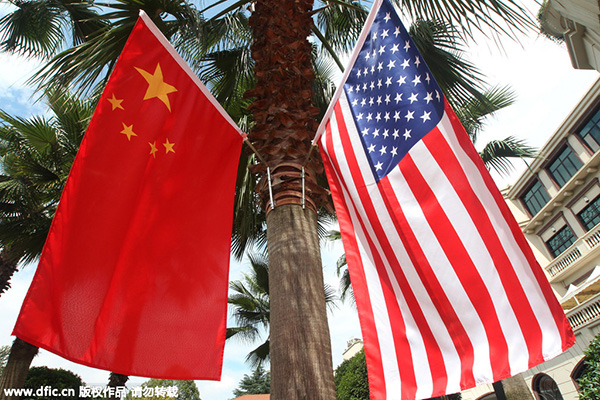
Negotiations on the China-United States Bilateral Investment Treaty will make up most of the discussions during President Xi Jinping's forthcoming state visit to the US, the Ministry of Commerce said on Sept 16, 2015. [Photo/IC] |
A high-standard Bilateral Investment Treaty (BIT) is essential for China and the US to emerge in a stronger economic relationship and steer away from the current global slowdown.
Only hours upon his arrival to the US on September 22, Chinese President Xi Jinping called that the two countries must conclude a high-quality agreement as soon as possible.
This explicit sense of urgency is well justified by not only the massive economic challenges faced by countries, but also the enormous benefits from cross-border investment for the world's two largest economies.
China's entry into the World Trade Organization had remarkably expedited the country's rise as a global trading power creating millions of new jobs for Chinese workers all while lowering prices for billions of consumers around the world. The bilateral trade volume that soared from around $100 billion USD in 2000 to $555 billion USD in 2014 speaks volume of the vital role trade has played in stabilizing economic ties between China and the US.
However, as the expansion of the Chinese economy slows down, it becomes increasingly obvious that another driving force other than trade is badly needed to sustain economic growth at home.
Sitting on a foreign exchange reserve of more than $3 trillion USD, China has gradually developed a keen interest in deploying some of its industrial prowess in overseas markets.
As a matter of fact, a large part of China's outbound investment, which exceeded $100 billion USD for the first time in 2014, had gone to infrastructure projects in developing countries. Yet, as more and more Chinese enterprises seek to globalize, they are eager to get equal investment access to those developed economies.
It is reported that China's direct investment in the US soared by 9 folds in the past five years. By the end of 2014, Chinese enterprises have invested $46 billion USD in the US while employing more than 80,000 full-time American employees, according to?a study sponsored by the National Committee on US-China Relations and done by US research firm Rhodium Group LLC.
The growth momentum of Chinese investment in the US is surely impressive, but the total remains fairly inadequate in view of the sheer size of the two economies. Both US and China's GDP stand above the $10 trillion USD mark.
The number of Chinese companies subject to US reviews for national security reasons is disproportionately high in spite of China's relatively small investment scale in the US. Under such circumstances, Chinese policymakers recognized one obvious merit for a high quality BIT is reduction of restraints Chinese firms face when investing on US soil.
A series of far-reaching reforms concerning State-owned enterprises as well as adoption of a negative list for investment have been rolled out to accelerate the country's ongoing economic transformation.
For the US, the benefits of a high-standard BIT will include jobs from which Chinese investment will create and greater opportunities for US companies to tap into the service sectors in China.
China's service sector currently accounts for about half of its gross domestic product while the US' accounts for 80 percent. Since a booming service sector is crucial to China's economic transition toward consumption-led growth, US investors are poised to win in providing world-class services in China.
These mutual benefits of a BIT deal do not deny the difficulties of the give-and-take course of action in negotiations. They are, however, a compelling reason as to why the two countries should encourage each other as much as possible in cross-border investments to cement the economic ties.
The author is a senior writer with China Daily. zhuqiwen@chinadaily.com.cn



I’ve lived in China for quite a considerable time including my graduate school years, travelled and worked in a few cities and still choose my destination taking into consideration the density of smog or PM2.5 particulate matter in the region.
Copyright 1995 - . All rights reserved. The content (including but not limited to text, photo, multimedia information, etc) published in this site belongs to China Daily Information Co (CDIC). Without written authorization from CDIC, such content shall not be republished or used in any form. Note: Browsers with 1024*768 or higher resolution are suggested for this site.
License for publishing multimedia online 0108263 Registration Number: 130349