 |
|
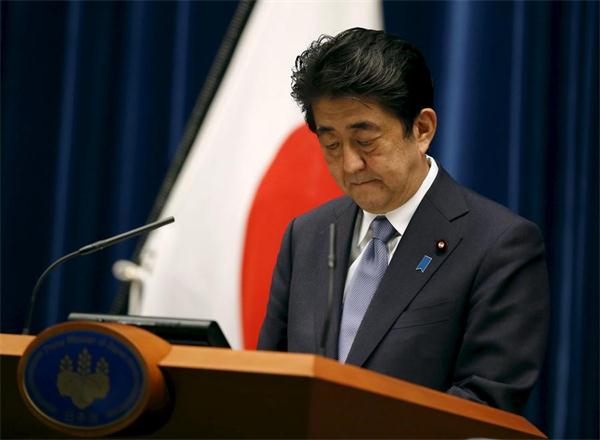
Japan's Prime Minister Shinzo Abe attends a news conference to deliver a statement marking the 70th anniversary of World War Two's end, at his official residence in Tokyo August 14, 2015.[Photo/Agencies] |
Japanese Prime Minister Shinzo Abe's statement on the seventieth anniversary of Imperial Japan's surrender to the Allied Forces ending World War II weaved several themes with heavy rhetoric. Whether it persuades or not remains a question.
He explains, in a somewhat veiled language, Japan's initial military expansion as a reaction to incursions of Western colonial powers to East Asia and the American attempt to isolate and contain Japan in a process of ambitious modernization. Japan alone among the Asian nations, Abe implies, had the power and courage to counter Western domination and to liberate Asians from Western aggression and exploitation. The Japanese forces marched with the slogan "We Will Build a Pan-Asian Co-Prosperity Sphere." An appeal was made to an attributed Asian xenophobia.
Abe cites the expressions of sadness and remorse offered by post-war Japanese leaders over the suffering that Japan caused to countless people in the regions under Japanese occupation.
The reader wonders if he was making such citations with an honest admission to Japan's commission of such crimes against humanity as the Nanjing Massacre, medical experimentation on live humans, sexual enslavement and exploitation of Korean, Chinese, Filipino and Dutch women by the military, exploitation of tens of thousands of Chinese and Korean men in Japanese mines and factories, and torture and murder of prisoners of war -- acts incongruous with the self-conferred status of a liberator.
Given the fact that the word "apology" was used by a past Japanese leader, could Abe's reference to all expressions of contrition by his predecessors with endorsement be taken to mean that he himself apologized? The semantics and pragmatics of "apology" differ from "sad" and "remorseful." Sadness and remorse are subjective states that do not necessarily imply a determination of will.
A sentimental wrong-doer may be sad and remorseful about the suffering his act causes, yet he may be determined to repeat it for reasons he deems overriding. He may even poetize the inner conflicts. Sincerity is necessary for apology. To apologize to a victim of one's wrong doing is to confess his guilt for the deed, to ask for forgiveness, and to willingly accept a corrective measure, and to do his part in the corrective process. An apology is a moral ritual and action.


Copyright 1995 - . All rights reserved. The content (including but not limited to text, photo, multimedia information, etc) published in this site belongs to China Daily Information Co (CDIC). Without written authorization from CDIC, such content shall not be republished or used in any form. Note: Browsers with 1024*768 or higher resolution are suggested for this site.
License for publishing multimedia online 0108263 Registration Number: 130349