 |
Abe, apology is not shameful
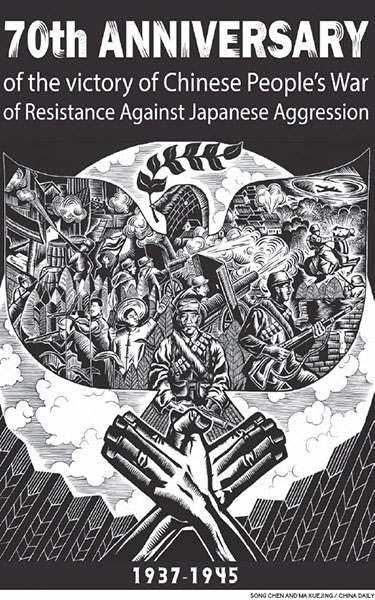
As the 70th anniversary of the victory of Chinese People's War of Resistance Against Japanese Aggression (1937-45) and the world's triumph against fascism approached, calls for Japan to own up to its war past started rising.
The world will be watching closely to see whether Japanese Prime Minister Shinzo Abe lives up to its expectations when he delivers a speech on Aug 14, one day ahead of the 70th anniversary of the end of WWII. His speech will reportedly include the words "apology" and "aggression", which were emphasized by former Japanese prime minister Tomiichi Murayama in his landmark statement in 1995.
At a crucial moment for Japan, when it will either reflect on or try to cover its wartime past, Murayama expressed "deep remorse" over and rendered a "heartfelt apology" for Japan's aggression and colonialism, which caused "tremendous damage and sufferings" to many Asian neighbors before and during WWII.
Representing the views of righteous people in postwar Japan, the Murayama Statement is a stark contrast to the irresponsible remarks made by some short-sighted Japanese politicians, who, by doing so, have brought nothing but uncertainty to East Asia.
History shows that neither the "apology" nor the "remorse" tarnished Japan's reputation as a major economy. On the contrary, Murayama's sincere reflection earned Japan more trust, even from China and the Republic of Korea, two of the main victims of Japanese aggression. This improved Japan's ties with China and the ROK and played a key role in safeguarding peace and stability in the region.
Therefore, it is obligatory for all Japanese leaders to reflect on their country's shameful militarist past and break with it for good. Only by doing so can Japan improve relations with its Asian neighbors and boost its national image.
Bu Ping is a researcher with the Institute of Modern History at the Chinese Academy of Social Sciences.



I’ve lived in China for quite a considerable time including my graduate school years, travelled and worked in a few cities and still choose my destination taking into consideration the density of smog or PM2.5 particulate matter in the region.
Copyright 1995 - . All rights reserved. The content (including but not limited to text, photo, multimedia information, etc) published in this site belongs to China Daily Information Co (CDIC). Without written authorization from CDIC, such content shall not be republished or used in any form. Note: Browsers with 1024*768 or higher resolution are suggested for this site.
License for publishing multimedia online 0108263 Registration Number: 130349