 |
|
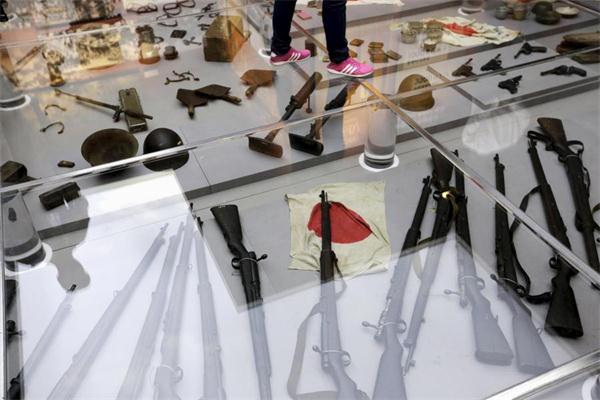
A visitor stands above Japanese soldiers' weapons which were seized by the Chinese People's Liberation Army (PLA) during World War Two, during a new exhibition at the Museum of the War of Chinese People's Resistance Against Japanese Aggression, near the Marco Polo Bridge on the outskirts of Beijing, July 7, 2015. [Photo/Agencies] |
Japanese prime minister
Shinzo Abe's statement on Friday, one day ahead of the 70th anniversary of the end of World War II in which fascist Japan was defeated, will be closely scrutinized by China and the Republic of Korea for signs of whether Abe has learned the lessons of history. Comments:A great nation should have the courage to face up to its past, shameful or not. Denying history is a betrayal of the country, and denying past crimes is a crime in itself. The Abe administration should render a sincere apology for Japan's invasion of its neighbors and colonial rule in Asia before and during WWII. In particular, Abe should admit Japan's wartime aggression and due responsibilities in his upcoming statement. Otherwise, it will be impossible for Japan to reconcile with its neighbors or contribute to the international community in the future.
Sha Zukang, former United Nations under-secretary-general for the department of economic and social affairs, Aug 10
Should Abe fail to include the words "aggression" and "apology" in his Aug 14 statement, China will voice strong criticism of him in a relentless and stern manner, telling the world that his dangerous views might lead Japan further astray. However, there is no need to take Abe's words too seriously, because his repugnant attitude toward history will only tarnish Japan's pacifist image, which took Tokyo years to rebuild. His futile attempts will make little difference to a rising China but may have negative consequences for Japan.
Global Times, Aug 11
How a Japanese leader like Abe sees his country's wartime past, to a large extent, indicates the approach Japan will adopt in the years to come. What Japan did in Asia before and during WWII was undoubtedly aggression. Hence, whether Abe will uphold the historical perspective of the Murayama Statement will reflect what lessons current Japanese politicians have learned from the country's notorious past, and how they intend to apply them for Japan's further development.
Guangming Daily, Aug 11
As much as Abe hates to admit it, there is a global consensus that the greatest achievement of WWII was the defeat of fascism and militarism, which were upheld by Japan. Given the landmark statement made by former prime minister Tomiichi Murayama in 1995, as well as the peace-loving people at home and abroad, Abe does not have much choice but to express deep remorse and apologize in his statement.
The Beijing News, Aug 11


Copyright 1995 - . All rights reserved. The content (including but not limited to text, photo, multimedia information, etc) published in this site belongs to China Daily Information Co (CDIC). Without written authorization from CDIC, such content shall not be republished or used in any form. Note: Browsers with 1024*768 or higher resolution are suggested for this site.
License for publishing multimedia online 0108263 Registration Number: 130349