 |
|
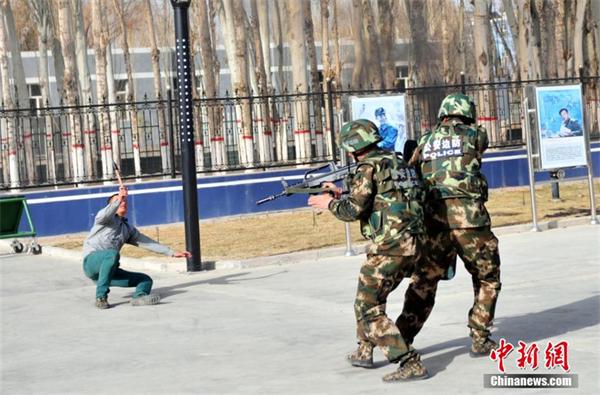
Police attending an anti-terror drill aim at a suspect at a border police station Xinjiang in this April, 2014 file photo. [Photo/Chinanews.com] |
Some recent reports in the Western media have brought Aktash, a small village in Hotan, Xinjiang Uygur autonomous region, in the limelight. Quoting some individuals, Radio Free Asia recently said the local government has forced shop and restaurant owners to sell liquor, which is against the teachings of Islam.
Xinjiang has always been a sensitive issue for the Western media. But since some of the foreign media outlets don't have even the basic knowledge of the situation in Xinjiang, they tend to quote partisan or misleading sources leading to distorted reports. Worse, some Western journalists, having never visited the region, conjure up reports from imagination that are full of prejudices.
The Western media's concern about Xinjiang is understandable. The region is home to China's largest Muslim community, shares borders with eight countries and has played an important role in the last round of reform of opening-up. And now that China is building the Silk Road Economic Belt, Xinjiang will be a key connecting point with other countries on the route.
But concern does not mean media outlets can distort facts. According to the Constitution of the People's Republic of China, every citizen enjoys religious freedom, which means he/she can choose to believe (or not to believe) in any religion, and should not be discriminated for his/her choice.
The situation in Hotan is more complicated than what Westerners think. Since Hotan has a long Buddhist tradition, even the Islamic religious practices there are different from neighboring cities. As a result, Hotan residents have their own understanding of religion, and have the constitutional right to do so.
In fact, various religious groups and practices co-exist and interact with each other in Xinjiang. For example, some Kyrgyz ethnic group members believe in Buddhism while some in Islam. Some Uygur and Kazakh people have combined shaman traditions with their current religious beliefs.
But some Western journalists don't even try to know these facts. They are only interested in portraying the region as one inhabited mostly by Muslims, without distinguishing one ethnic group from another. They have no qualms about presenting even non-Muslims or non-Muslim members of some ethnic groups as Muslims. Also, they tend to report some social problems as ethnic or religious conflicts.
Besides, Western media outlets use double standards when it comes to covering incidents in Xinjiang. The same media outlets that view a majority of Muslims as potential terrorists in the West often use terms like "freedom fighters" to refer to real terrorists in Xinjiang, which is both unethical and illegal.
As far as the reports on Aktash are concerned, China is a secular country that has adopted market economy and protects the legal economic activities of its citizens. As long as a store or restaurant doesn't sell spurious, injurious or illegal products, no one can use the threat of religion to stop it from selling anything, even alcohol.
The true threat to Xinjiang and its residents is religious extremism. Religious radicals, apart from planting baseless stories, such as the one on Aktash, in the Western media, also force men to grow thick beards and women to wear hijab, and socially boycott or even attack those who disobey their diktats.
Such disturbing developments have aroused concern worldwide, even among the Western media. Religious extremism poses a threat to all countries no matter which ideologies they follow. Facing this common enemy, the right choice for all countries is to work together to free society of the negative influences of religious extremism, not to distort facts or blame each other.
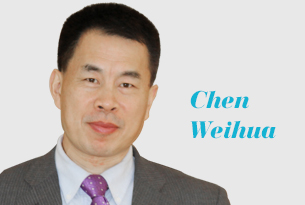
The author is a researcher at and vice-director of the Institute of Central Asia Studies, affiliated to the Xinjiang Academy of Social Sciences.



I’ve lived in China for quite a considerable time including my graduate school years, travelled and worked in a few cities and still choose my destination taking into consideration the density of smog or PM2.5 particulate matter in the region.
Copyright 1995 - . All rights reserved. The content (including but not limited to text, photo, multimedia information, etc) published in this site belongs to China Daily Information Co (CDIC). Without written authorization from CDIC, such content shall not be republished or used in any form. Note: Browsers with 1024*768 or higher resolution are suggested for this site.
License for publishing multimedia online 0108263 Registration Number: 130349