 |
|
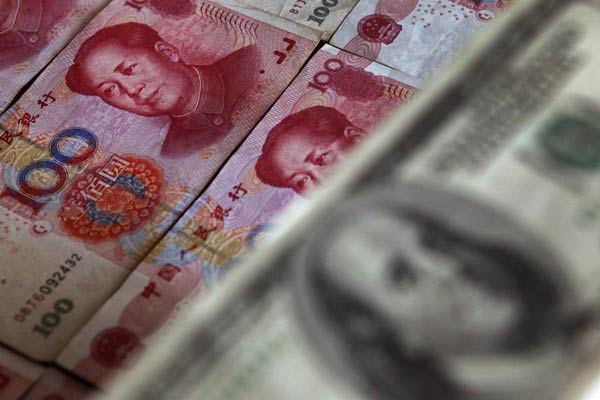
Renminbi appreciation is no longer seen as a one-way bet, posing an even bigger challenge for companies as they will have to start hedging their exposure to it. [Photo/Agencies] |
Just a year and a half after opening its first free trade zone in Shanghai, China is now liberalizing its offshore borrowing for firms registered there. The China (Shanghai) Pilot Free Trade Zone was originally billed as a three-year trial, but China is forging ahead, and will expand Shanghai and launch three new zones in Tianjin in northern China, Fujian in the southeast and Guangzhou in the south in the near future.
While not the sole conduit for reform in China, the trade zone plan is crucial to the prospects of a fully convertible renminbi, and the speed at which China is rolling out the plan is surprising many observers.
The announcement on Feb 12 that offshore borrowing for firms in the Shanghai free trade zone will be relaxed further - and that the new regulation will include banks - is a significant break-through and suggests China is committed to achieving full convertibility of the RMB.
Launched in September 2013, the Shanghai free trade zone has been an important test bed in China for freer trade, and a more liberal business and financial environment. The fact that China is now expanding the zone and replicating it in other cities confirms that the government considers it a success.
The zone is bringing real benefits to China's economy and companies. According to official data, the export-import trade passing through the four areas of the free trade zone between January and August rose 11 percent compared to the same period of 2013, before the zone was established. Logistics and inventory costs are down by an average of 10 percent and the average time required to clear customs has been reduced by three to four days.
The zone is also contributing to China's financial reform. Initiatives such as interest-rate liberalization and the cross-border renminbi sweeping program - which allows companies to repatriate their trapped cash onshore to offshore through a linked cash pool, are crucial to promoting internationalization of the renminbi. Between January and August last year, two-way renminbi flows arising from cross-border sweeping reached more than 27.2 billion.
The risks associated with the zone are proving manageable. A negative list was put in place to restrict foreign funds from investing in specific industries within the zone, such as sensitive or overheated sectors. This list has since been shortened, demonstrating the Chinese government's growing level of confidence in the zone. Also, commercial banks are enforcing know-your-customer procedures to ensure that the funds moving in and out of China are supporting genuine trade.



I’ve lived in China for quite a considerable time including my graduate school years, travelled and worked in a few cities and still choose my destination taking into consideration the density of smog or PM2.5 particulate matter in the region.
Copyright 1995 - . All rights reserved. The content (including but not limited to text, photo, multimedia information, etc) published in this site belongs to China Daily Information Co (CDIC). Without written authorization from CDIC, such content shall not be republished or used in any form. Note: Browsers with 1024*768 or higher resolution are suggested for this site.
License for publishing multimedia online 0108263 Registration Number: 130349