 |
|
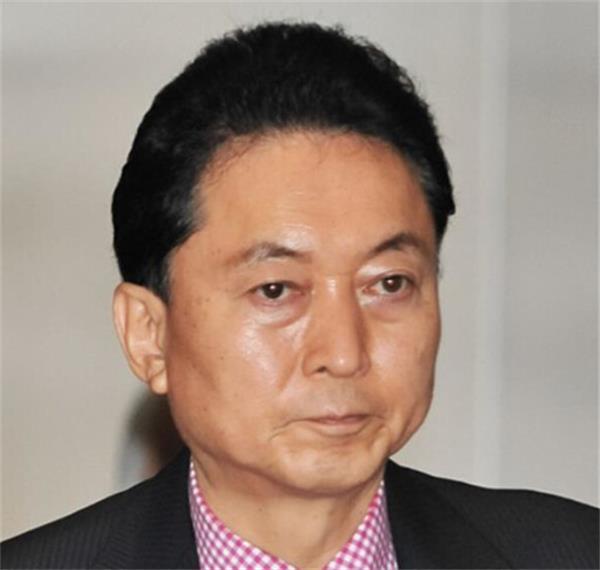
In an interview with China Daily, former Japanese prime minister Yukio Hatoyama says Japan should issue a sincere apology for the suffering it inflicted on its neighbors to pave the way for an East Asian Community. |
Their territorial dispute and other issues of history still stand in the way of a normal relationship between China and Japan.
In an exclusive interview with China Daily in Tokyo, former Japanese prime minister Yukio Hatoyama said the Yasukuni Shrine, which honors 14 Class-A war criminals among others, and the territorial dispute over the Diaoyu Islands, named the Senkakus in Japanese, were the primary political bottlenecks for improvements in the ties between the two countries.
"Although neither can give in completely, the two need to make efforts to talk the issues over," Hatoyama said.
The world commemorates the 70th anniversary of the end of World War II next year, and Japanese Prime Minister Shinzo Abe is planning to issue a statement on August 15, the day when Japan capitulated in 1945.
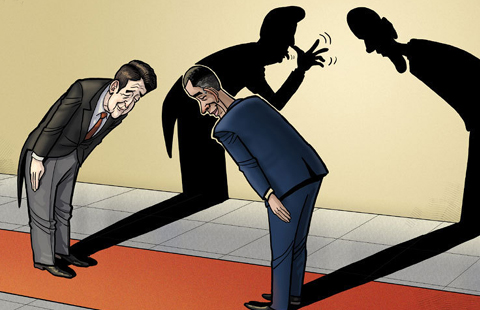
"Abe should apologize again for the tremendous sufferings Japan brought to China, South Korea and other countries in the war. Only in this sense, the Murayama Statement should be readdressed," Hatoyama said.
In his words, Japan's apology should be delivered in a more humble and sincere manner.
On August 15, 1998 then Japanese prime minister Tomiichi Murayama apologized to the victims of Japanese aggression during the war. The apology, known as the Murayama Statement, was hailed as a significant step and a catalyst for improving relations between Japan and its neighbors.
The reconciliation of former enemies in Europe stands in striking contrast to the situation in Asia. Germany, France, Britain and other nations have united for WWI and WWII commemorations. Similar scenes have not happened in Asia.
Hatoyama claimed that the reconciliation of Germany and France first took the form of the European Coal and Steel community in 1951, and the two countries continued to serve as the big engines driving the European Union integration.
Reconciliation between China and Japan has happened in more informal areas such as environmental protection, with many Japanese people traveling to China to help plant trees.
During his premiership (2009-10), Hatoyama and his Chinese counterpart Wen Jiabao agreed to hold discussions on joint development of the disputed gas fields in the East China Sea. The project failed to materialize because, in Hatoyama's words, Japan is short of sincere remorse for the war and the suffering it inflicted on China. To him, the Sino-Japanese joint development of the East China Sea gas fields could have been Asia's equivalent of the European Coal and Steel Community.


Copyright 1995 - . All rights reserved. The content (including but not limited to text, photo, multimedia information, etc) published in this site belongs to China Daily Information Co (CDIC). Without written authorization from CDIC, such content shall not be republished or used in any form. Note: Browsers with 1024*768 or higher resolution are suggested for this site.
License for publishing multimedia online 0108263 Registration Number: 130349