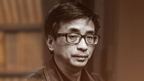
"Such a tendency may also explain why many Western countries did not begin to fully institutionalize democracy until a much later point than the promise enshrined in their Constitutions," he said.
At the same time, centralization of power is not unconditionally a bad thing either, just as separation and decentralization of power are not unconditionally good.
Centralization, especially the better-managed moderate type, doesn't necessarily lead to despotism, or a compromise of citizens' basic rights and the public's main interests, the political scientist insisted.
Only when a new social structure has evolved, backed by a set of mainstream values and a conservative political agenda, can a country afford to pursue a steady decentralization process, Fang said. That is also why many of the attempts by the United States to promote democracy in other countries have failed to produce government accountability and social stability, leading to political unrest and economic stagnation instead.
Now that China is becoming a more important power, an intelligent, rather than dogmatic, restudy of China's own experience can help it not only explain itself to others, and answer their questions and criticisms, but also understand other countries and work with them, Fang said.
"Today's rising China is at a similar crossroads to the one that faced the United States in 1945, the year marking the end of World War II and the beginning of US-led world order", he said. In order to gain a better understanding of the post-War world, Washington made a consistent effort to support research in global politics.
Fang highlighted the contribution of the late Harvard University political scientist Samuel Huntington (1927-2008) to the US hegemony of almost 70 years, which he said was outstanding. Huntington was author of Political Order in Changing Societies, which was translated into Chinese and read widely in the early days of the Chinese reform, and proponent of the famous theme of "clash of civilizations", first in a magazine article in 1993 and then in his book The Clash of Civilizations and the Remaking of World Order.
China's peaceful rise requires that its own political scientists help China explain itself to the world and study other countries at the same time. As Fang noted: "We need to catch up."
But in studying the world, Fang said China should not just listen to what he called "library professors". Instead, it should learn more from the politicians, entrepreneurs, political journalists and historians. "They are the ones with the real-world experience," he said.
Ed Zhang is editor-at-large of China Daily and Cui Shoufeng is a writer with the paper. edzhang@chinadaily.com.cn and cuishoufeng@chinadaily.com.cn
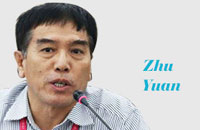 Considering money as the end is the tragedy

Copyright 1995 - . All rights reserved. The content (including but not limited to text, photo, multimedia information, etc) published in this site belongs to China Daily Information Co (CDIC). Without written authorization from CDIC, such content shall not be republished or used in any form. Note: Browsers with 1024*768 or higher resolution are suggested for this site.
License for publishing multimedia online 0108263 Registration Number: 130349