If we think about bilateral trade, then China as the manufacturing hub of the world and India's strength in knowledge-based services and manufacturing can be exploited for mutual benefit. Their geographical proximity and large size economies would help the two countries exploit these synergies for the benefit of the people on both sides as a countervailing measure to withstand the excesses of globalization.
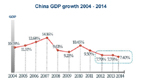
Since China seeks to change its economic development model from one based on exports and FDIs to one driven by domestic consumption, it can create an investment policy for Indian businesses. China has been stressing on not only "GDP-centric" growth but also "people-centric growth", which translates into opportunities for some Indian companies that have achieved excellence in industries such as healthcare, pharmaceuticals, legal services, IT and IT-enabled services and education (English language).
Some of the Chinese and Indian companies are well known across the world for their success in outward FDI. This is one area where both countries can discuss ways to promote mutual investment in their respective countries and possibly learn from their unique "national business systems". But despite India holding the promise of cheaper labor costs (compared with China) and the Modi government offering a red carpet, Chinese companies should take necessary steps to have a detailed and transparent "environmental impact assessment" to avoid later day embarrassment, because the Indian media and civil society can be quite unforgiving and that could strain bilateral relations.
As two major non-Western powers in the 21st century, China and India need to have a serious look at the way they perceive each other and reshape their foreign policies accordingly. They may not restructure their bilateral ties on the lines of mulinzhengce (good neighbor policy), but they could at least make some adjustments for mutual benefit. So, will China and India commit themselves to the "orbital jump" with an eye to the "shadow of the future"? We have to wait for the answer.
The author is an assistant professor, Humanities & Liberal Arts Area, at the Indian Institute of Management, Kozhikode, India, and adjunct fellow of the Institute of Chinese Studies, New Delhi.


Copyright 1995 - . All rights reserved. The content (including but not limited to text, photo, multimedia information, etc) published in this site belongs to China Daily Information Co (CDIC). Without written authorization from CDIC, such content shall not be republished or used in any form. Note: Browsers with 1024*768 or higher resolution are suggested for this site.
License for publishing multimedia online 0108263 Registration Number: 130349