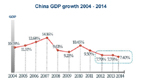
To put numbers to this, the World Bank estimates that China's total annual air-pollution cost - based on what Chinese themselves indicate they are willing to pay to reduce their risk of dying - could be as high as 4 percent of GDP. Yet the Chinese trade-off has been phenomenally beneficial. In 1982, the average Chinese earned $585 a year; the figure had increased to $7,958 by last year. The annual per capita environmental cost is $318. So, not surprisingly, most other developing countries would gratefully seize the opportunity to replicate China's growth pattern - including its pollution.
Of course, China can do more to reduce air pollution. It is estimated that meeting the WHO's interim standards could reduce damages by $80 per capita. But that pales in comparison to the $600 increase in per capita income just in 2013.
Another environmental concern gets a lot more global attention these days. Global warming is a real problem, though much, much smaller than indoor air pollution. The WHO estimates that 4.3 million people die from indoor air pollution whereas global warming causes perhaps 141,000 deaths a year.
Crucially, reducing CO2 is going to be much harder because it is a byproduct of producing the cheap energy that makes the world go round. Environmentalists and Western politicians demand that China invest a lot more in renewable energies. But this appears hypocritical, because the West gets only 0.8 percent of its energy from solar and wind. Moreover, these technologies receive annual subsidies worth $60 billion, and China can definitely find better uses for that sort of money.
We need a smarter approach to deal with global warming. Here the US experience can show the way. Hydraulic fracturing (or fracking) has made natural gas much cheaper, leading to a dramatic switch in electricity production away from coal. Because gas emits half the CO2 per kilowatt/hour, it has enabled the US to cut its emissions more than what all the well-intentioned solar panels and wind turbines in the world have achieved. The domestic production of gas gives the US greater energy independence. And cheaper gas has probably saved consumers $100 billion and increased GDP by $283 billion a year.
With fracking, China could similarly achieve greater GDP growth and more energy independence, and reduce its CO2 emissions to a greater extent than through expensive and unreliable solar and wind power.
To fix climate in the long term, we need to invest much more in research and development of green energy. This will help reduce the price of green energy compared with fossil fuels over the next decades to eventually allow all to enjoy a good life without the adverse effects of both indoor and outdoor air pollution.
The author is president of the Copenhagen Consensus Center.
(China Daily 08/04/2014 page9)


Copyright 1995 - . All rights reserved. The content (including but not limited to text, photo, multimedia information, etc) published in this site belongs to China Daily Information Co (CDIC). Without written authorization from CDIC, such content shall not be republished or used in any form. Note: Browsers with 1024*768 or higher resolution are suggested for this site.
License for publishing multimedia online 0108263 Registration Number: 130349