Besides, a state acquires historic rights through effective exercise of these rights (long series of acts, omissions and patterns of behavior) by one or more states, a practice followed by relevant states. The concept of historic rights is almost equivalent to that of historic water.
In this vein, Leo Bouchez, a renowned international law professor, says the concept of "historic rights" has evolved from the concept of "historic water" and "historic bays". The development from "historic bays" to "historic water" and from "historic title" to "historic rights" indicates the evolution of legal concepts with the development of state practice, and that such concepts have not been finalized.
From the point of view of China, one of the world's oldest civilizations, the South China Sea is part of the traditional Asian order and, hence, it would be inappropriate to comprehend the nine-dash line by relying solely on the Westphalian nation-state system.
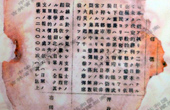
As Keyuan Zou, Harris professor of International Law at the University of Central Lancashire in the UK, has observed, the South China Sea nine-dash line map was officially released by the Chinese Kuomingtang government half a century before the UNCLOS, and one decade before the 1958 Four Geneva Conventions on the Law of the Sea. Thus, China's historic rights within the nine-dash line cannot be ignored. The nine-dash line drawn by the Chinese government in 1947, at approximately the median position between China's South China Sea islands and reefs and the coastlines of bordering states, reflects the scope of China's claims. The consistency of the claims has been maintained by China after 1949, and the claims have been recognized or acquiesced to by bordering states over a long period of time. Therefore, the nine-dash line has probative force and weight under international law.
The so-called ambiguity in China's nine-dash line map and its claim on the waters within that line mainly stems from the imperfection of the UNCLOS. To some extent, international law on historic rights is defective in theory and doctrine and lacks a unified standard.
China has been striving to clarify its claim in the South China Sea. But the joint efforts of the international community are also needed to complement and improve the UNCLOS by agreeing to a new international convention or protocol in order to clarify the understanding of historic rights.
The author is deputy director of Maritime Security Institute at East China University of Political Science and Law in Shanghai. The views expressed are personal. His most recent book is Legal Interpretation of China's South China Sea Map: An Inclusive Approach to Ocean Public Order.


Copyright 1995 - . All rights reserved. The content (including but not limited to text, photo, multimedia information, etc) published in this site belongs to China Daily Information Co (CDIC). Without written authorization from CDIC, such content shall not be republished or used in any form. Note: Browsers with 1024*768 or higher resolution are suggested for this site.
License for publishing multimedia online 0108263 Registration Number: 130349